Written by: Mariam Idris
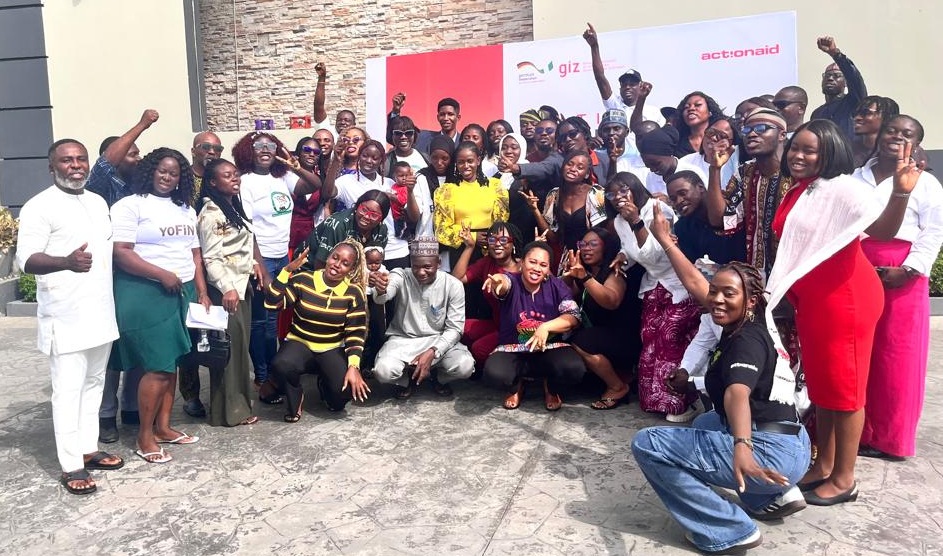
With support from GIZ, the Climate and Sustainable Development Network (CSDevNet) join ActionAid Nigeria to successfully host the National Young People’s Convening on NDC 3.0 and Climate Action in Abuja on May 31 and June 1, 2026.
The event brought together young people, youth-led organizations, climate advocates, policymakers, and development partners to strengthen youth engagement in climate governance and amplify young voices in the implementation of Nigeria’s Nationally Determined Contributions (NDC 3.0). The two-day convening provided a strategic platform for participants to deepen their understanding of Nigeria’s climate commitments under the Paris Agreement, examine the climate challenges confronting young people and agrifood systems, and collectively develop a youth position on climate action priorities for the country.
The outcomes and recommendations from the convening are expected to feed into ongoing national climate policy discussions and will be formally presented by youth representatives during the Nigeria Youth Climate Summit 2026, scheduled to take place on June 2 and 3, 2026.
The convening sought to increase the knowledge and understanding of young people and youth-led organizations on Nigeria’s NDC 3.0, climate governance processes, and climate-resilient agrifood systems. It also aimed to develop a consolidated youth position on climate action and strengthen youth-led advocacy and accountability mechanisms beyond the summit.
Speaking during the event, Mr. Azubike Nwokoye, Food Systems Specialist at ActionAid Nigeria, emphasized the importance of youth participation in shaping Nigeria’s climate future.
“As citizens of Nigeria, we are here to deliberate on a common position and activate young people to become champions with the capacity to participate effectively in the NDC 3.0 review process,” he said.
Mr. Nwokoye noted that only 13 states in Nigeria currently have climate policies in place, highlighting the urgent need for more states to develop and review climate policies that institutionalize youth participation across various sectors of the NDC 3.0 implementation and review process.
Reflecting on Nigeria’s climate policy journey, the National Network Coordinator of CSDevNet, Mr. Steve Abuh, recalled the organization’s contribution to the country’s first NDC review process, particularly through the inclusion of waste management as a critical climate action component.
He expressed concern that despite Nigeria’s abundance of policies and strategic frameworks, implementation remains weak.

“Nigeria is one of the richest countries in Africa in terms of policies, but unfortunately many of these policies remain on paper,” he stated.
Mr. Abuh stressed that beyond reviewing the NDC, the convening was focused on identifying practical solutions, particularly in sustainable agriculture and clean energy utilization. He underscored the critical role young people can play as drivers of innovation and climate solutions but lamented that inadequate government financing for youth empowerment continues to hinder meaningful youth participation in climate action.
Participants at the convening emphasized the need to strengthen Nigeria’s Monitoring, Reporting and Verification (MRV) system to improve transparency, accountability, and tracking of NDC implementation progress.
A major concern raised during discussions was the lack of dedicated financing mechanisms for young people. Stakeholders noted that approximately 80 percent of Nigeria’s NDC 3.0 implementation is dependent on conditional international climate finance. As a result, participants called for a dedicated allocation within these climate funds that is directly accessible to young people and youth-led organizations.
The convening concluded that youth must not only be recognized as beneficiaries of climate interventions but also as key partners in designing, implementing, monitoring, and evaluating climate policies and programmes.
Key Recommendations from the Youth Convening
Participants adopted the following recommendations for government, development partners, and relevant stakeholders:
- Institutionalize Youth Participation: Federal and state governments should establish formal mechanisms to ensure meaningful youth representation in climate governance structures, NDC implementation committees, and policy review processes.
- Expand State Climate Policies: States without climate policies should urgently develop and adopt climate action frameworks while integrating youth participation across all sectors.
- Strengthen Climate Finance Access: A dedicated percentage of climate finance resources, including conditional international climate funds, should be reserved for youth-led climate initiatives and enterprises.
- Improve Monitoring and Accountability: The government should strengthen the national Monitoring, Reporting and Verification (MRV) system to ensure transparency, accountability, and effective tracking of NDC implementation outcomes.
- Invest in Climate-Resilient Agriculture: Increased support should be provided for youth-led innovations in sustainable agriculture, renewable energy, and climate-smart agrifood systems to enhance food security and resilience.
- Build Youth Capacity: Continuous training and capacity-building programmes should be implemented to equip young people with the technical knowledge and leadership skills necessary to engage effectively in climate governance.
- Promote Green Jobs and Entrepreneurship: Public and private sector investments should prioritize green jobs, climate innovation hubs, and youth entrepreneurship opportunities to accelerate climate action and economic development.
Looking Ahead
As Nigeria advances the implementation of its NDC 3.0 commitments, the voices emerging from the National Young People’s Convening underscore a growing demand for inclusive climate governance, increased accountability, and targeted investments in youth-led climate solutions.
The recommendations developed during the convening will serve as a roadmap for youth engagement in climate action and will contribute to shaping discussions at the Nigeria Youth Climate Summit 2026 and beyond. Stakeholders agreed that achieving Nigeria’s climate ambitions will require not only stronger policies but also meaningful partnerships that place young people at the center of climate decision-making and implementation.