Written by: Mariam Idris
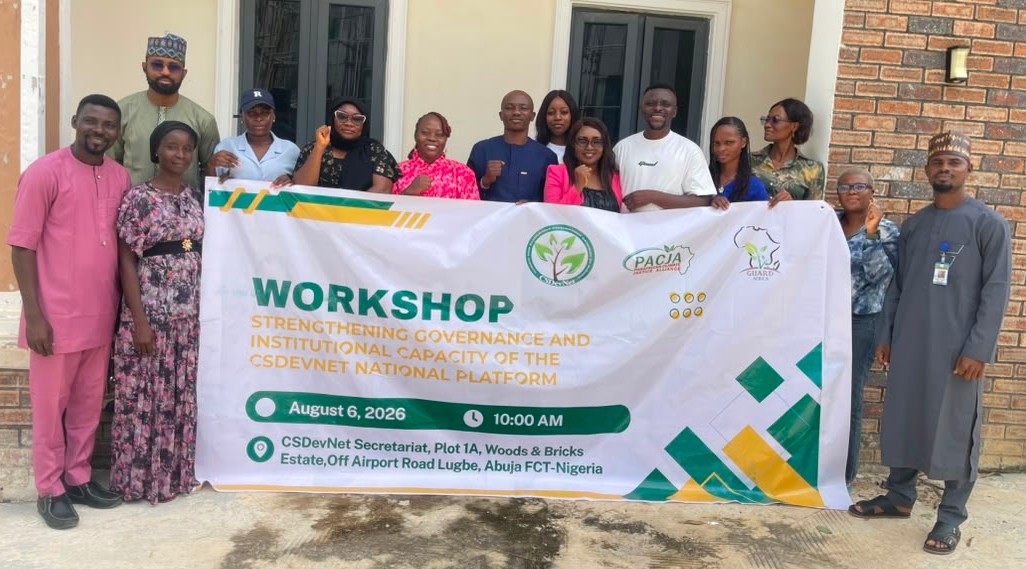
The Climate and Sustainable Development Network of Nigeria (CSDevNet) today convened a one-day capacity strengthening workshop on “Strengthening Governance and Institutional Capacity of CSDevNet National Platform” at its secretariat in Lugbe, Abuja. The workshop brought together Staff and key members of the network around its proximity to strengthen institutional systems, improve organizational effectiveness, and establish standardized tools that will enhance project implementation, monitoring, reporting, and evidence-based policy engagement across the network.
Opening the workshop, the National Network Coordinator, Abuh Steve, welcomed participants and reaffirmed CSDevNet’s commitment to strengthening institutional governance as the foundation for delivering impactful climate and sustainable development interventions. He noted that as the network continues to expand its national and regional engagements, strong governance systems, accountability mechanisms, and effective coordination remain essential to achieving meaningful and sustainable outcomes.
“This workshop is more than a capacity-building exercise; it is an opportunity for us to collectively improve our internal systems, standardize our processes, and strengthen the operational effectiveness of our network. I encourage every participant to actively contribute to the discussions and help shape the tools that will guide our work moving forward.” Abuh Steve, National Network Coordinator, CSDevNet.
The first technical session, facilitated by the NNC, was focused on strengthening the governance of the CSDevNet National Platform through improved coordination, accountability, and collaborative action. Participants explored practical approaches for enhancing institutional governance, clarifying roles and responsibilities, strengthening communication among member organizations, and promoting transparent decision-making processes. Discussions emphasized that effective governance is fundamental to building trust, improving collaboration, and positioning the network to respond more effectively to emerging climate and development challenges.
In the second session, Mr. Ibrahim Marvins facilitated an engaging discussion on Results-Based Management (RBM), highlighting the importance of planning, monitoring, evaluation, and learning in achieving measurable development outcomes. Participants examined strategies for integrating RBM principles into programme design and implementation while strengthening organizational performance and accountability. The session underscored the value of using results frameworks and performance indicators to demonstrate impact, improve learning, and strengthen accountability to donors, partners, and the communities served by CSDevNet.
The workshop also featured highly participatory group sessions designed to strengthen organizational tools and standardize internal processes. During the first interactive session, facilitated by Idris Mariam, participants conducted a comprehensive review and validation of the draft CSDevNet Project Tracking Template. Working collaboratively in groups, participants identified implementation gaps, proposed practical improvements, and agreed on a standardized project management tool that will support consistent planning, implementation, monitoring, reporting, and organizational learning across both the Secretariat and member organizations.
Building on this collaborative approach, the second interactive session, facilitated by Joseph Paul, focused on reviewing and validating the CSDevNet Policy Brief Template. Participants refined the proposed structure, strengthened its content, and agreed on a standardized format that will improve the quality and consistency of policy briefs produced across the network. The discussions reinforced the importance of evidence-based advocacy in influencing climate and sustainable development policies and ensuring that CSDevNet continues to provide credible, research-driven policy recommendations at national and regional levels.
During the plenary session, each group presented its recommendations for discussion and validation. Participants reached consensus on the revised templates and agreed on practical next steps for institutionalizing their use across the network. The workshop concluded with an evaluation session and closing remarks delivered by Abuh Steve, who commended participants for their active engagement and commitment to strengthening the organization. He emphasized that the adoption of standardized governance, project management, and policy engagement tools marks an important milestone in CSDevNet’s ongoing institutional development journey. He reaffirmed the network’s commitment to fostering a culture of accountability, collaboration, innovation, and continuous learning that will enhance its ability to deliver impactful climate action and sustainable development initiatives across Nigeria.