
Written by Paul Gwumapan Joseph
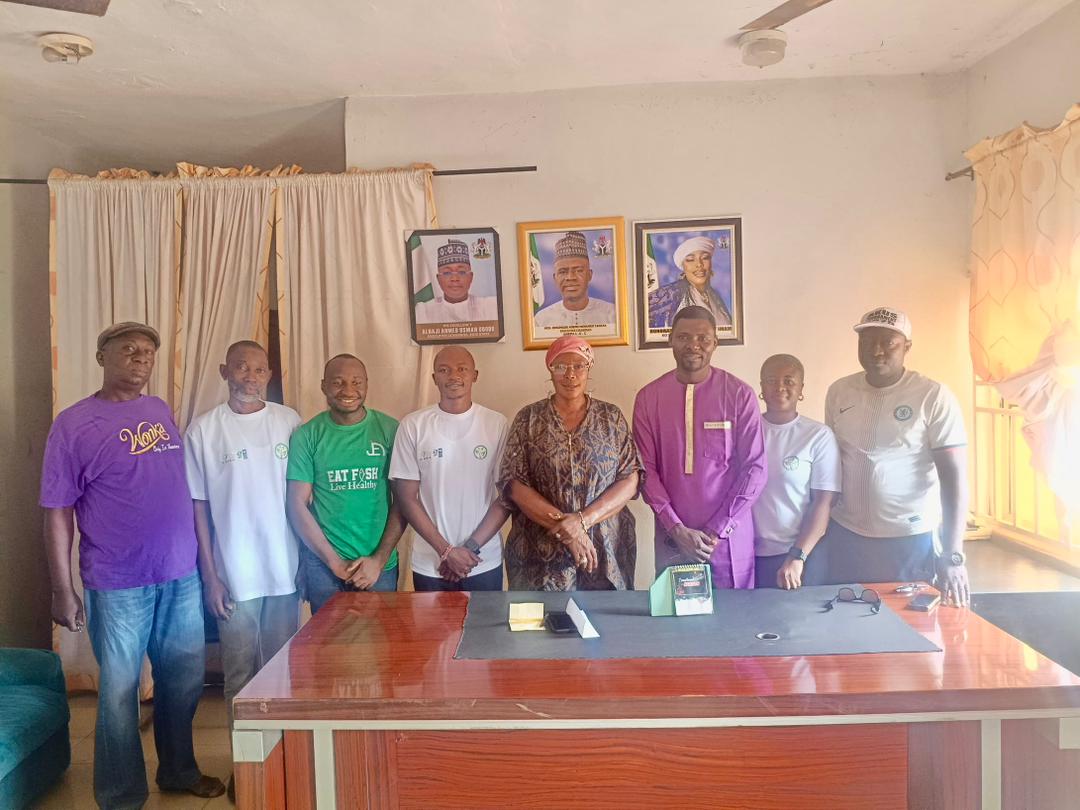
Climate and Sustainable Development Network (CSDevNet), led by its National Network Coordinator, Abuh Stephen, alongside the project team, conducted high-level advocacy visits to the Onu Ankpa and the Chairman of Ankpa Local Government Area as part of ongoing efforts to address environmental degradation and strengthen climate-resilient livelihoods in Enjema District, Kogi State.
The engagements form a critical step in advancing a community-driven environmental governance framework, under the GEF Small Grants Programme-supported project on land restoration and climate-smart agriculture in coal mining-affected communities.
At the palace of the Onu Ankpa, discussions focused on the increasing environmental pressures facing communities in Enjema District, including land degradation, declining soil productivity, and the long-term impacts of coal mining activities on local livelihoods.
The engagement emphasized the strategic role of traditional leadership in shaping community norms, strengthening accountability, and supporting the transition toward sustainable land use practices.
Speaking during the visit, Abuh Stephen noted:
“Sustainable environmental management in communities like Enjema requires strong local leadership. Traditional institutions are critical in driving behavioral change and ensuring that community-led solutions are adopted and sustained.”
The traditional council acknowledged the urgency of the issues raised and expressed readiness to support community sensitization efforts and local actions aimed at environmental protection and sustainable resource use.
The advocacy visit to the Chairman of Ankpa Local Government Area provided an opportunity to elevate the discussion to the level of policy, coordination, and enforcement.

Key issues highlighted included the persistent environmental impacts of coal mining, particularly non-compliance with land reclamation obligations and the growing spread of coal dust along major corridors, which poses increasing health risks to surrounding communities.
CSDevNet emphasized the importance of local government leadership in enforcing environmental standards, coordinating responses, and aligning development priorities with sustainability objectives.
“Addressing these challenges requires coordinated action. Local governments play a central role in ensuring compliance, protecting communities and supporting sustainable alternatives that can reduce environmental pressure,” Abuh Stephen stated.
In response, the Chairman acknowledged the concerns and reaffirmed the Local Government’s willingness to collaborate with CSDevNet and relevant stakeholders. The engagement secured institutional support for advancing community-level environmental action, including participation in the development of a structured response framework.
“We recognize the environmental concerns raised and are committed to supporting initiatives that will promote sustainability and improve the well-being of our communities,” the Chairman noted.
Advancing the Community Green Action Plan (CoGAP)
A key outcome of the advocacy engagements was the initiation of the Community Green Action Plan (CoGAP) for Enjema District.
The CoGAP is being positioned as a locally owned, action-oriented framework that will:
- Identify priority environmental challenges linked to mining and land degradation
- Define practical, community-driven solutions
- Clarify roles for local government, traditional institutions, and community groups
Inputs from both traditional and local government stakeholders during the visits will inform the ongoing consultation process and drafting of the plan. The CoGAP is expected to serve as a reference point for coordinated environmental action and a platform for aligning community priorities with local governance structures.

The advocacy also recognized the complex role of coal mining within the local economy. While contributing to environmental degradation, mining activities remain a source of livelihood for some community members.
CSDevNet’s approach therefore emphasizes a gradual, just and community-sensitive transition, promoting viable alternatives such as climate-smart agriculture and aquaculture while strengthening awareness and environmental accountability. This balanced framing is critical to ensuring community buy-in and long-term sustainability of proposed interventions.
Beyond dialogue, the advocacy visits mark a shift toward systems-level engagement, linking community realities with institutional responsibility. By securing alignment with both traditional and local government leadership, CSDevNet is laying the groundwork for:
- Stronger local environmental governance
- Improved coordination across stakeholders
- Increased accountability in resource management
- Scalable, community-driven solutions
The outcomes of these engagements will feed directly into the development and validation of the CoGAP, as well as ongoing project activities focused on climate-smart agriculture, sustainable aquaculture, and community resilience. CSDevNet will continue to engage stakeholders at multiple levels to ensure that environmental action in Enjema District is not only community-led but also institutionally supported and sustainable.
These efforts position CSDevNet as a key facilitator of integrated, locally grounded solutions that address the intersection of environmental degradation, climate change, and livelihood vulnerability while offering a model with strong potential for replication in similar contexts.