

Written by: Mariam Idris
The Climate and Sustainable Development Network (CSDevNet) successfully convened a Post-COP30 National Dialogue on Advancing Nigeria’s Nationally Determined Contribution (NDC) 3.0, alongside its Annual General Meeting (AGM) in Abuja.
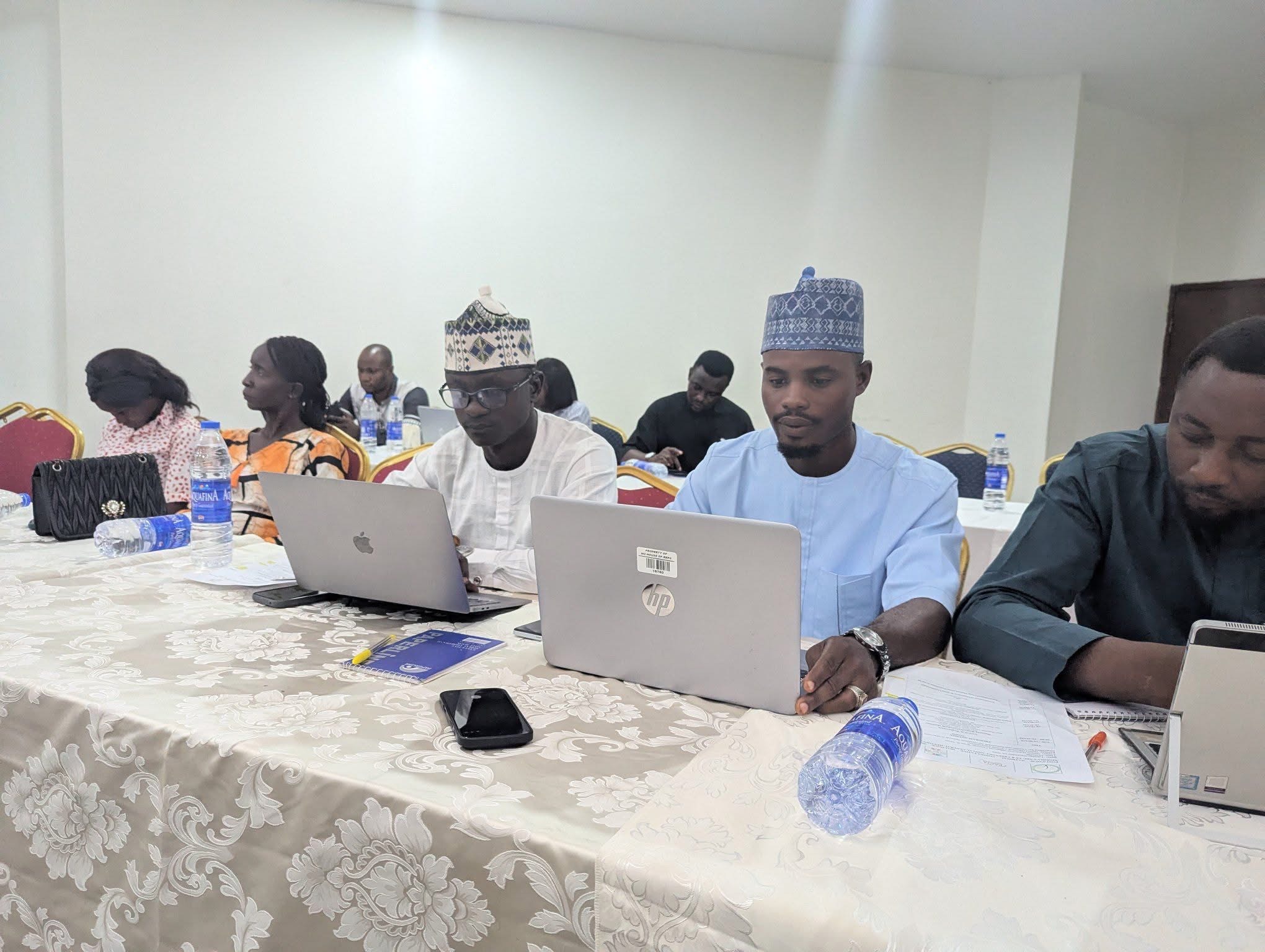
The high-level event brought together over 60 participants drawn from government ministries and agencies, academia, civil society organisations (CSOs), the media, development partners, and other key stakeholders.
The dialogue was organised to reflect on outcomes from the recently concluded COP30 and to chart a clear, inclusive, and action-oriented pathway for the effective implementation of Nigeria’s NDC 3.0.
Participants engaged in constructive discussions aimed at strengthening national climate ambition, promoting climate justice, and translating global commitments into tangible national and community-level action. It also emphasised the importance of people-centred climate solutions that are inclusive, equitable, and responsive to local realities.
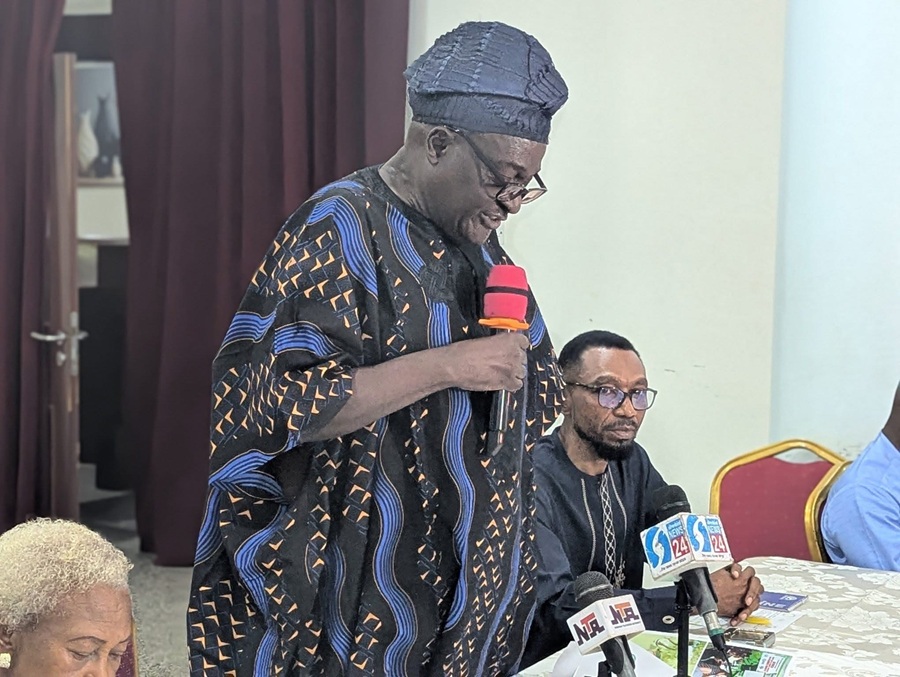
In his welcome address, Prof. Ibrahim Choji, mni, Chairman of the CSDevNet Board, reaffirmed the Network’s strong commitment to aligning Nigeria’s national climate priorities with global climate processes.
He welcomed members, partners, and stakeholders, commending their sustained dedication to climate justice, sustainable development, and inclusive climate action.
Reflecting on the past year, Prof. Choji noted that Nigeria had experienced significant climate-related challenges, including devastating floods, rising food insecurity, and increasing vulnerability among communities.
Despite these challenges, he highlighted positive developments such as the validation of Nigeria’s NDC 3.0, gradual progress in climate-related policies, and renewed global momentum following COP30.
According to him, CSDevNet remains committed to translating climate policies into action by amplifying civil society voices in national and global climate spaces, supporting grassroots and community engagement, strengthening advocacy efforts, and promoting transparency and accountability in climate governance.
Also, he emphasised that civil society plays a critical role in ensuring that climate commitments move beyond policy documents and result in measurable improvements in people’s lives.
“CSDevNet’s continued role in translating climate policies into action by amplifying civil society voices, supporting grassroots engagement, strengthening advocacy, and promoting accountability in climate governance, ” he said.
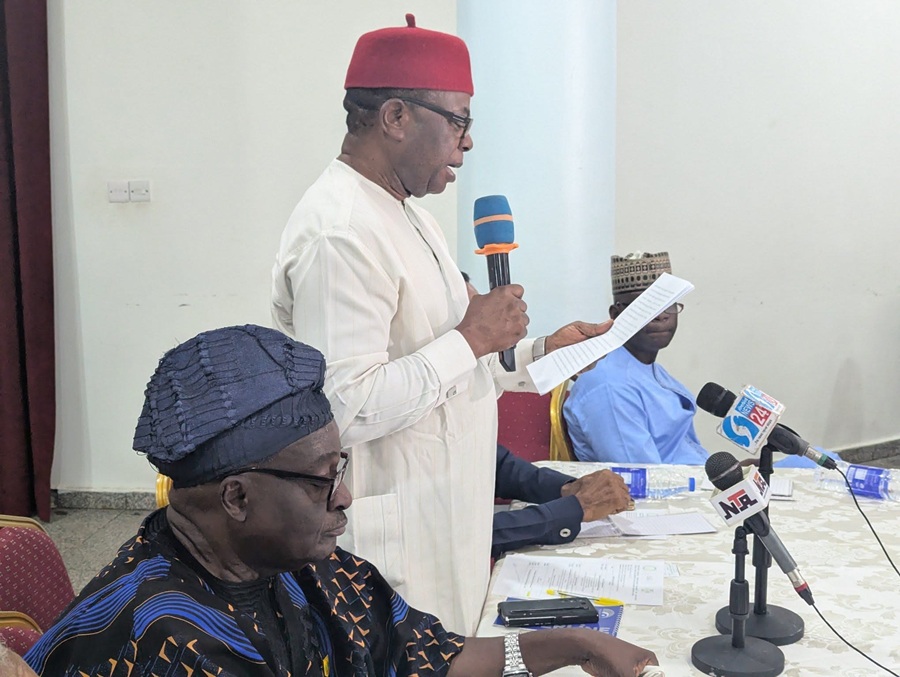
Delivering a goodwill message, Former member of the House of Representatives of Nigeria representing Ikwuano/Umuahia North and South Federal Constituency Hon. Rep. Sir Sam Onuigbo, FCIS, FNIM, KJW, CSDevNet Patron, underscored the significance of the dialogue as a reflection of Nigeria’s renewed resolve to elevate climate ambition and sustainable development.
He noted that global climate action has entered a new phase, shifting from pledges to concrete implementation. For Nigeria, he stressed, the Nationally Determined Contribution under the Climate Change Act 2021 remains the central framework guiding national climate action.
Hon. Onuigbo described NDC 3.0 as both a declaration of intent and a call to action that demands cooperation, innovation, accountability, and the mobilization of actors across all sectors and levels. He highlighted the importance of ensuring that post-COP30 priorities respond to the lived experiences of communities facing climate impacts, while promoting equity, inclusiveness, and a just transition.
He further identified key opportunities within NDC 3.0 implementation, including; Strengthening mitigation and adaptation measures, scaling up nature-based solutions, enhancing transparency and accountability in climate governance, expanding renewable energy deployment and green job creation.
Hon. Onuigbo also emphasized the potential of Nigeria’s emerging carbon market to mobilize climate investment and accelerate emissions reduction, while stressing the need for strong environmental integrity and community safeguards.
He concluded by reaffirming his commitment to collaborative, evidence-driven climate action and expressed confidence that Nigeria can emerge as a continental leader in low-carbon development and climate resilience.

Representing the Federal Ministry of Agriculture and Food Security, Mrs. Anna Kalu delivered a goodwill message emphasizing the relevance of the dialogue to Nigeria’s agricultural and food systems. She expressed the Ministry’s appreciation to CSDevNet for convening a timely platform to reflect on COP30 outcomes and align them with national priorities.
She noted that COP30 strongly emphasized the interconnectedness of agriculture, food security, climate resilience, and sustainable development goals. For Nigeria, these outcomes resonate with national mandates to enhance sustainable agricultural productivity, strengthen resilience to climate shocks, and safeguard food production for a rapidly growing population.
Mrs. Kalu highlighted the critical role of partnerships involving policy actors, researchers, civil society organizations, and local communities in advancing climate-smart agriculture, reducing emissions, and strengthening adaptation strategies.
She reaffirmed the Ministry’s commitment to aligning COP30 outcomes with national policies, climate adaptation plans, and ongoing agricultural governance reforms.
She noted that, strong partnerships, knowledge sharing, and increased stakeholder engagement made it essential for advancing climate-smart agriculture, reducing emissions, and strengthening adaptation strategies across all sectors.
“As we move into the post-COP implementation phase, the ministry will advance its commitment to aligning COP30 outcomes with national policies, climate adaptation plans, and ongoing agricultural governance,” said Mrs. Kalu. “We look to continue engagement with the network in translating ambition into impact for climate-secure food security for Nigeria”. She spoke.
In conclusion, the following recommendations and contributions from key stakeholders were highlighted;
- The Federal Government should strengthen inter-ministerial coordination mechanisms to ensure harmonized and proactive implementation of NDC 3.0 across MDAs.
- Subnational governments should be supported to align state development plans with national climate priorities.
- Scale up public, predictable, and concessional climate finance, with simplified access for civil society, women-led, youth-led, and community-based initiatives.
- Promote blended and non-traditional financing mechanisms, including green bonds, community climate funds, and carbon revenues, with strong transparency and safeguards.
- Mainstream climate-smart agriculture, agroecology, and ecosystem restoration into national and subnational agricultural policies.
- Increased mentorship for the younger generation and dual-education and entrepreneurship for young people, upscaling waste management.
- Strengthen partnerships among government, CSOs, research institutions, and farmers to enhance resilience and food security.
- Ensure NDC 3.0 implementation translates into decent green jobs, especially for youth and women beyond urban centers.
- Integrate gender-responsive budgeting, disaggregated data, and trauma-informed approaches into climate planning and finance.
- Institutionalize civil society participation in monitoring, reporting, and accountability frameworks for NDC 3.0.
- Support knowledge sharing, community feedback mechanisms