
Written by Paul Gwumapan Joseph
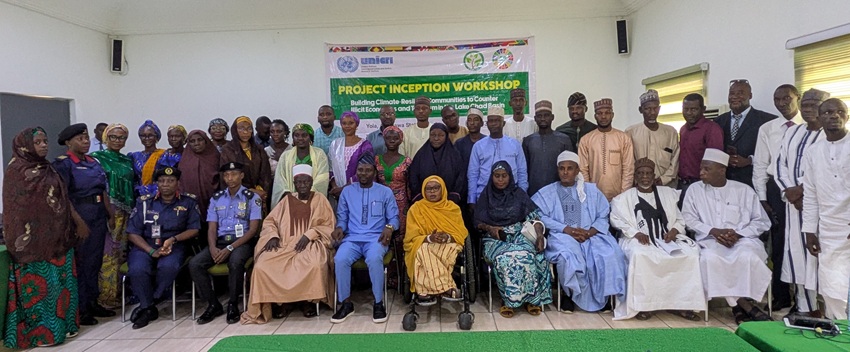
Climate and Sustainable Development Network (CSDevNet), in partnership with the United Nations Interregional Crime and Justice Research Institute (UNICRI), held a one-day inception workshop and capacity building session in Yola, Adamawa State (Nigeria), on 9 April 2026.
The workshop formally launched the project “Building Climate-Resilient Communities to Counter Illicit Economies and Terrorism in the Lake Chad Basin,” bringing together approximately 50 stakeholders from Adamawa, Borno, and Yobe States.
The event was designed to raise awareness of the links between climate stress, livelihood vulnerability, illicit economies, and violent extremism, while also building foundational stakeholder capacity in prevention of violent extremism (PVE) and community-based mediation.
Proceedings were structured around technical presentations, panel discussions, PVE and mediation capacity-building sessions, and group work exercises, with media coverage provided by a local radio station and the Nigerian Television Authority (NTA).
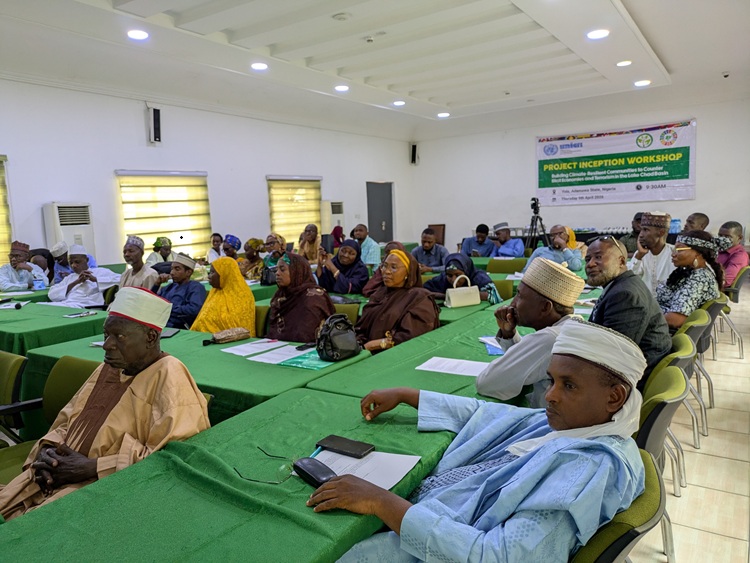
The workshop drew diverse representation from government ministries and agencies, security institutions – including the Nigeria Police Force (Adamawa Command) and the Nigeria Security and Civil Defence Corps (NSCDC) – community and traditional leaders, civil society organizations, youth and women’s groups, development practitioners, and media representatives.
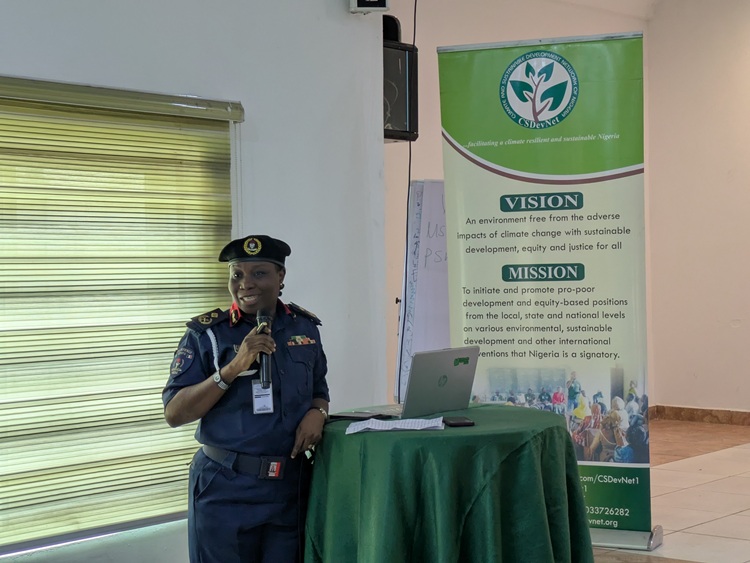
The NSCDC Adamawa Command, represented by Deputy Commandant Charity Fwa, delivered a goodwill message underscoring the Corps’ statutory mandate in disaster management and climate response, including its Agro-Rangers Unit’s role in providing physical security to farmers and herders and mediating resource-based disputes, as well as its Anti-Human Trafficking and Gender Unit’s relevance to the project’s thematic scope.
Welcoming participants, Mr. Steve Abuh Monday, National Network Coordinator of CSDevNet, affirmed the network’s commitment to addressing the intertwined crises of climate change and insecurity across the Lake Chad region.
“The communities most vulnerable to climate impacts are often the same communities most susceptible to recruitment into illicit economies and violent extremist groups,” he noted. “This project is about ensuring that those communities have the awareness, the skills, and the partnerships to protect themselves.”
Mr. Abuh also highlighted the significance of integrating climate resilience approaches into counter-terrorism and illicit economy frameworks, describing the Lake Chad Basin as a critical testing ground for this integrated methodology.
The workshop equally benefited from the active engagement and strong institutional support of key government and security stakeholders.
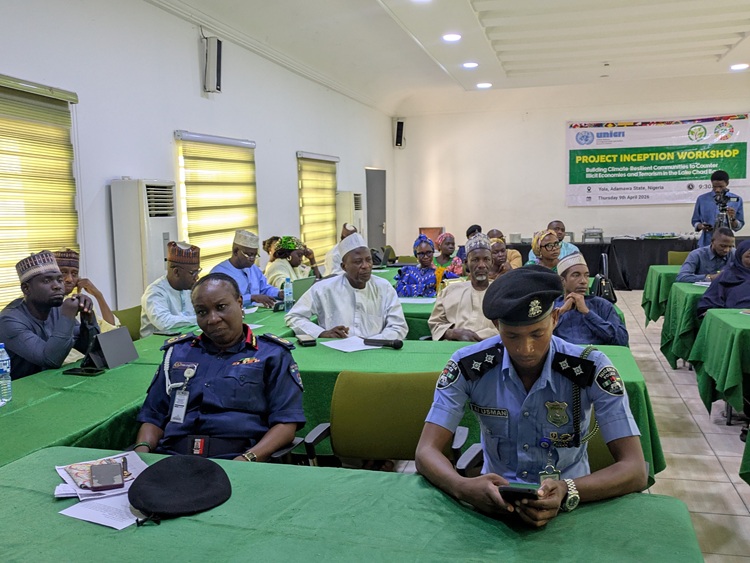
Delivering the goodwill message on behalf of the Commissioner of Police, Adamawa State Command, CP Usman A. Isah, Representative of the Nigeria Police Force (Adamawa Command), affirmed the Force’s commitment to community-based security approaches that address the root causes of instability.
“Security cannot be achieved by enforcement alone,” he stated. “When communities are informed, resilient and engaged, they become partners in preventing crime and extremism, and that is exactly what this project is building.”
Also lending institutional weight to the workshop, Mr. Mathew A. Waya, Director of the Department of Geology and Representative of the Commissioner, Adamawa State Ministry of Mineral Resources, expressed the Ministry’s strong support for the project’s focus on environmental governance and resource-based conflict.
“The mismanagement and illicit exploitation of natural resources in this region is deeply connected to the insecurity we face,” Mr. Waya observed. “We welcome this initiative and pledge the Ministry’s cooperation in ensuring that our communities benefit from sustainable and well-governed resource management.”
Similarly, Mr. Adamu Ishaya, representing the Commissioner, Adamawa State Ministry of Environment, pledged the Ministry’s full support for the project’s climate resilience and environmental components.
“Climate change is not a future threat in Adamawa, it is a present reality,” he said. “Initiatives that link environmental action with peacebuilding and community empowerment are precisely what this State needs, and we stand ready to support its implementation.”
Substantive sessions were led by experienced CSDevNet facilitators. Mr. Usman Inuwa, North East Zonal Coordinator, anchored the session on Illicit Economies and Trafficking Dynamics, drawing on first-hand knowledge of community vulnerabilities across the North-East sub-region.
Mr. Inuwa emphasised the growing links between livelihood collapse and the expansion of illicit networks, noting that “when legitimate livelihoods disappear, illicit economies do not wait, they fill the vacuum immediately, especially among young people with no alternatives.”
His session provided participants with grounded, evidence-based insights into how trafficking, informal resource extraction, and extremist recruitment operate along similar pathways in climate-stressed communities.
The PVE and Mediation Capacity Building Session was facilitated by Mr. Ibrahim Muhammad Shamsuddin, Strategic Lead of CASDI and Northwest Zonal Coordinator of CSDevNet.
“Violent extremism often grows from unmet needs and frustration, not just ideology,” Mr. Shamsuddin emphasised. “Addressing root causes such as poverty, exclusion, and injustice is essential for prevention, and community actors are best placed to do this.”
Participants were equipped with practical skills in active listening, neutrality, reframing blame into needs, and the use of trusted community intermediaries.
Panel discussions and group work generated rich community-level insights. Participants strongly underscored the central role of faith leaders as frontline responders in resilience building, calling for their formal inclusion as implementation partners rather than passive consultees.
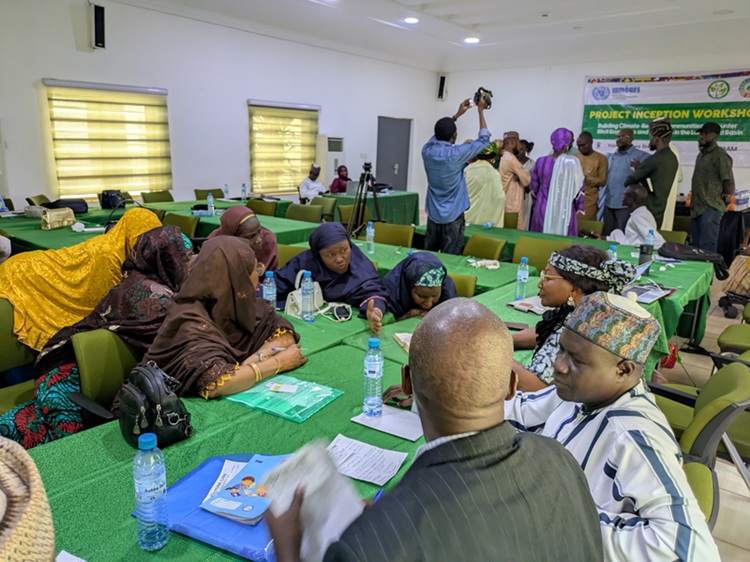
There was broad consensus on the need for meaningful youth engagement through practical action, the inclusive integration of persons with special needs (PWSN) in mediation processes, and targeted interventions addressing community vulnerability to illicit drug use.
Working groups produced actionable recommendations spanning early warning systems and environmental awareness, climate-smart livelihood strategies (including afforestation, renewable energy, improved seed varieties, and water management), and multi-sectoral stability responses encompassing community dialogue, employment generation, safe schools, and security sector collaboration.
The project is implemented by CSDevNet with support from UNICRI, in response to the compounding pressures of climate change, environmental degradation, and insecurity facing communities in North-East Nigeria.
Declining agricultural productivity, water scarcity, displacement and loss of livelihoods have deepened economic vulnerability, particularly among youth and women creating enabling environments for illicit economies and extremist recruitment.
The inception workshop marks the first of several planned stakeholder engagements under the project, which adopts an integrated approach combining awareness raising, climate-resilient livelihoods programming, and community-level stakeholder empowerment.
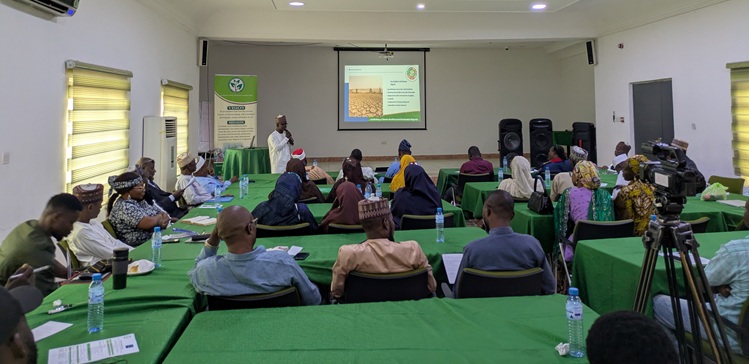
The workshop successfully delivered its core objectives: formally launching the project, collecting baseline data through pre- and post-workshop surveys, initiating a multi-stakeholder dialogue platform, and building foundational capacity on PVE and community mediation.
The breadth of institutional support from state ministries, security agencies, and civil society signals a strong foundation for sustained multi-stakeholder collaboration. Going forward, the project will translate these outputs into community-level engagements across the three states, with faith leaders, traditional authorities, women’s groups, and youth networks positioned as key actors in local prevention and resilience efforts.
CSDevNet and UNICRI remain committed to further strengthening this collaboration and ensuring that all project interventions are firmly grounded in the realities and strengths of the communities they serve across the Lake Chad Basin.