Written by: Mariam Idris
Communities across the Lake Chad Basin continue to face the combined impacts of climate change, livelihood vulnerability, insecurity, and social disruption. In Adamawa, Borno, and Yobe States, declining agricultural productivity, erratic rainfall, shrinking grazing lands, and reduced access to water resources are placing increasing pressure on households that rely on farming and livestock for their livelihoods.
Recognizing the growing connection between climate vulnerability, economic insecurity, and community resilience, Climate & Sustainable Development Network (CSDevNet), in partnership with the United Nations Interregional Crime and Justice Research Institute (UNICRI), conducted integrated Prevention of Violent Extremism (PVE), Climate-Smart Agriculture (CSA), and Livelihood Support activities on 24 June, 2026 in Yola (Adamawa State), Maiduguri (Borno State), and on 25 June, 2026 in Potiskum (Yobe State) under the project “Building Climate-Resilient Communities to Counter Illicit Economies and Terrorism in the Lake Chad Basin.”
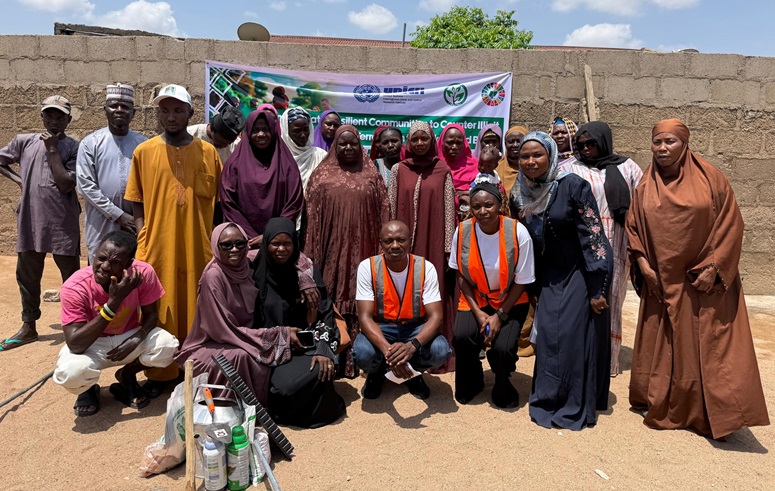
The activities brought together women farmers, youth, community leaders, and vulnerable households to strengthen their understanding of the links between climate change, livelihoods, security, and peacebuilding while promoting practical solutions that build resilience.
A key component of the intervention was the Prevention of Violent Extremism (PVE) awareness session, which encouraged participants to reflect on the environmental and socio-economic changes affecting their communities.
Facilitators engaged participants in discussions on changing rainfall patterns, declining crop yields, reduced water availability, shrinking grazing lands, and their effects on household incomes, food production, and community well-being.
Participants explored how climate-induced livelihood challenges can increase community vulnerability to illicit economies and violent extremism. The discussions emphasized that while poverty alone does not cause violent extremism, economic hardship, social exclusion, and limited livelihood opportunities can create conditions that increase vulnerability to criminal and extremist recruitment.
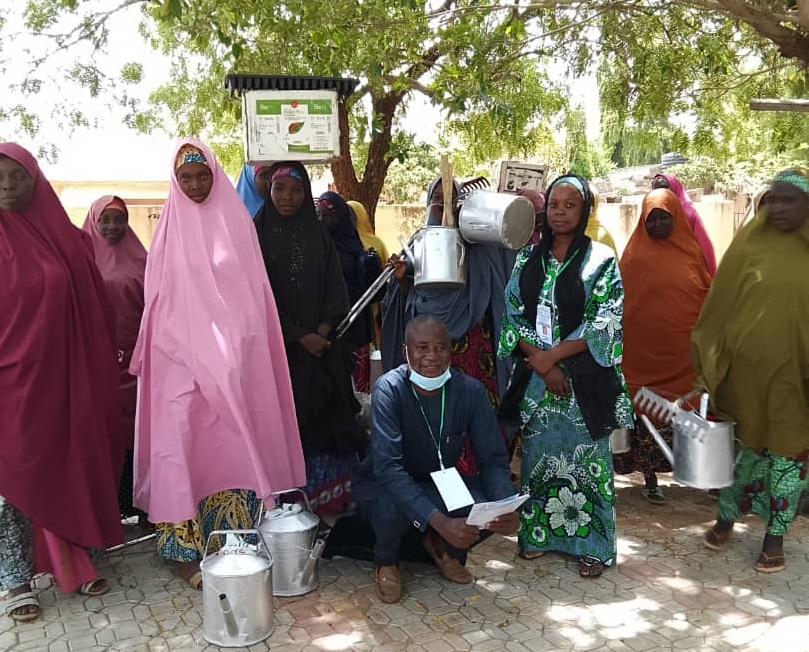
Speaking during the session, CSDevNet State Coordinator for Adamawa, Mrs. Farida Sadiq, emphasized the importance of collective action. “When people work together to address common challenges, communities become better equipped to withstand environmental and security shocks. Building resilience starts with strengthening livelihoods, promoting social cohesion, and creating opportunities that empower people to contribute positively to their communities.”
Participants also received practical training on Climate-Smart Agriculture (CSA), facilitated by CSDevNet Programme Officer Mr. Paul Joseph.
The training introduced practical farming techniques that help increase agricultural productivity, strengthen resilience to climate change, and promote sustainable management of natural resources.
Participants learned about the three pillars of Climate-Smart Agriculture:
- Increasing agricultural productivity and household incomes through improved farming practices.
- Strengthening adaptation and resilience to climate-related risks such as droughts, floods, and erratic rainfall.
- Promoting sustainable land, soil, and water management to protect natural resources for future generations.
Mr. Joseph explained that integrating CSA with livelihood support enables vulnerable households to transform knowledge into practical action while strengthening food security and household resilience.
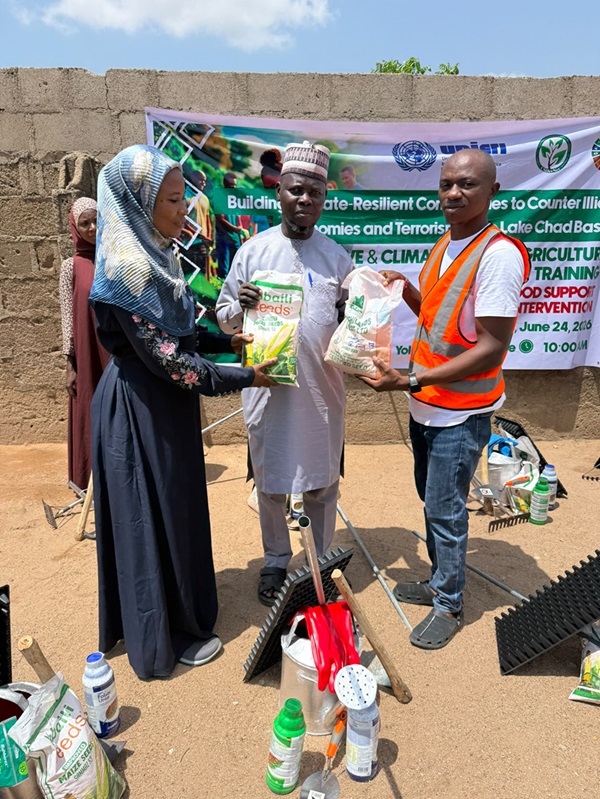
Following the training, participants received Climate-Smart Agriculture starter kits containing improved maize and sorghum seeds, organic fertilizer, and home gardening tools.
The improved seed varieties are better suited to withstand drought, pests, and shorter rainy seasons, while the organic fertilizer supports healthier soils and environmentally sustainable farming practices. The home gardening tools encourage year-round household vegetable production, improving nutrition and creating additional income opportunities.
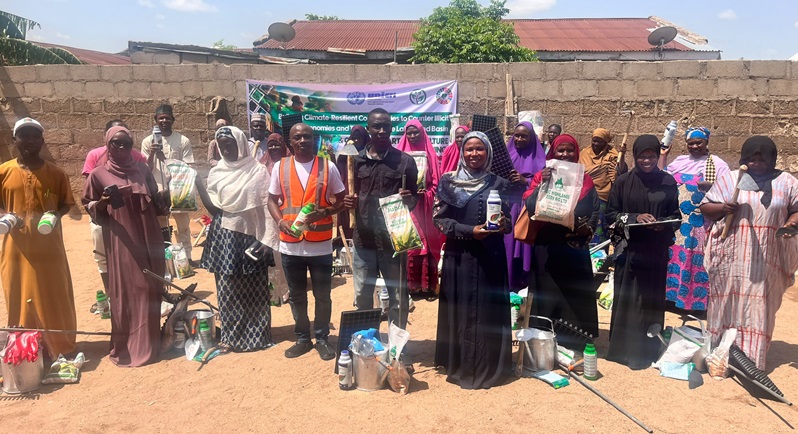
According to Mr. Joseph: “Each item in the starter kit represents a practical application of Climate-Smart Agriculture and serves as a tool for strengthening household resilience. By equipping participants with these resources, we are helping them translate knowledge into action and build more sustainable livelihoods for their families and communities.”
Beneficiaries welcomed both the knowledge gained and the practical support provided.
Abdulrahman Haruna, a participant, said: “I never expected to receive a starter kit after the awareness workshop. This training has given us practical skills and support. We are hopeful that our crops will improve over the coming months, helping to strengthen our livelihoods and food security.”
Another beneficiary, Mrs. Nimi Yakabu, expressed her appreciation: “Thank you for providing us with the fertilizer and training. Many of us have not used these farming inputs before. We are eager to apply what we have learned and look forward to seeing positive results on our farms.”
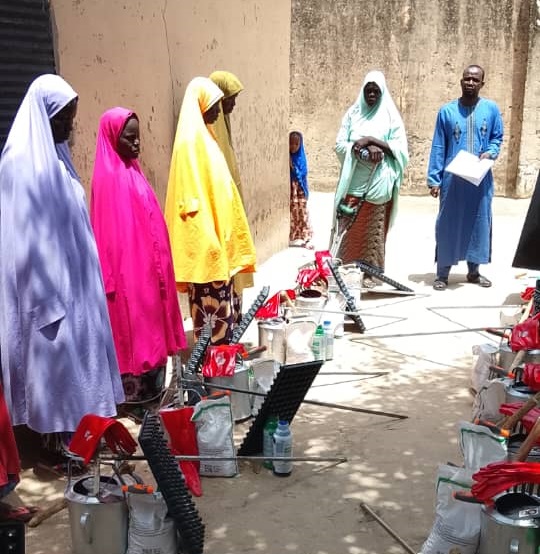
The programme recognizes women and young people as critical drivers of resilience, sustainable development, and peacebuilding. Women play a central role in household food security, local economic activities, and community cohesion, while young people are essential partners in promoting innovation, productivity, and peaceful coexistence.
By equipping women and youth with practical agricultural knowledge, livelihood resources, and climate adaptation skills, the project contributes to stronger household incomes, improved food security, and reduced vulnerability to illicit economies and violent extremism.
The integrated activities conducted simultaneously in Yola, Maiduguri, and Potiskum demonstrate the value of combining climate resilience, livelihood support, and community-led prevention efforts to address the interconnected challenges facing communities in the Lake Chad Basin.
As climate and security risks continue to evolve, investing in people-centred, locally led solutions remains essential. Through strengthened livelihoods, sustainable agricultural practices, and greater community collaboration, CSDevNet and UNICRI are supporting communities to become more resilient, more self-reliant and better equipped to build peaceful and sustainable futures.