
Written by: Paul Gwumapan Joseph
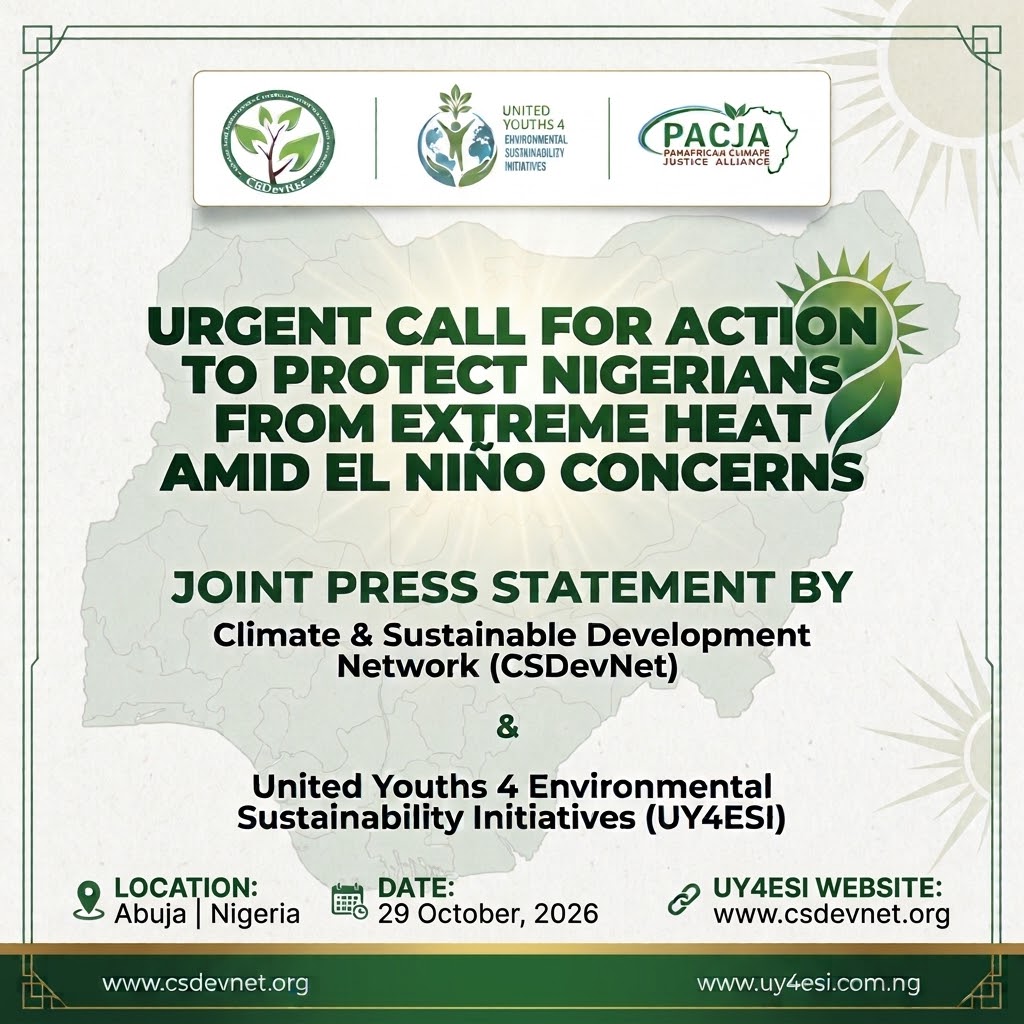
Climate and Sustainable Development Network of Nigeria (CSDevNet) and United Youths 4 Environmental Sustainability Initiatives (UY4ESI) have called for stronger public health preparedness, effective risk communication and community-based adaptation in response to concerns over the intensifying El Niño phenomenon and the risks associated with extreme heat.
While the specific effects of El Niño on Nigeria remain dependent on regional climate conditions, the potential for heightened temperatures reinforces the need for early action. Extreme heat can cause serious health complications, including heat exhaustion and potentially fatal heatstroke, particularly among children, older persons, outdoor workers and people with limited access to safe drinking water and healthcare.
Abuh M. Stephen, National Network Coordinator of CSDevNet, emphasised that effective heat preparedness must extend beyond public awareness to practical community-level interventions and stronger collaboration among stakeholders.
He said:
“Building resilience to extreme heat requires coordinated action, sustained community engagement and innovative adaptation programmes. CSDevNet’s HEATSAFE COMMUNITIES PROJECT in Kano State represents an important opportunity to strengthen community preparedness and improve understanding of heat-related risks. We must build stronger synergies among government agencies, civil society, development partners and local communities to expand effective interventions and ensure that climate preparedness translates into tangible protection for those most at risk.”
Musa Ibrahim, Executive Director of UY4ESI, stressed that protecting citizens from extreme heat must be a public health priority, calling on government to strengthen preventive measures and ensure that climate information reaches communities in ways they can understand and act upon.
He said:
“Government must move beyond issuing warnings to ensuring that Nigerians have the information and support they need to protect themselves. The National Orientation Agency, NiMet, Health authorities and other relevant institutions must work together to communicate heat risks clearly and in accessible local languages. Citizens should be encouraged to drink water regularly, reduce strenuous outdoor activities during periods of intense heat, seek shade and limit prolonged exposure to direct sunlight. Government must also help cushion the effects on vulnerable populations through practical public health interventions and improved access to essential services.”
Both organizations call on federal and state governments to integrate extreme heat into public health and disaster preparedness plans, strengthen early-warning communication, support vulnerable communities and invest in accessible, evidence-based adaptation measures.
In conclusion, extreme heat is a growing public health concern that demands timely information, practical support and coordinated action. No Nigerian should be left without the knowledge or means to take reasonable steps to protect their health and safety.