
Written by: Mariam Idris
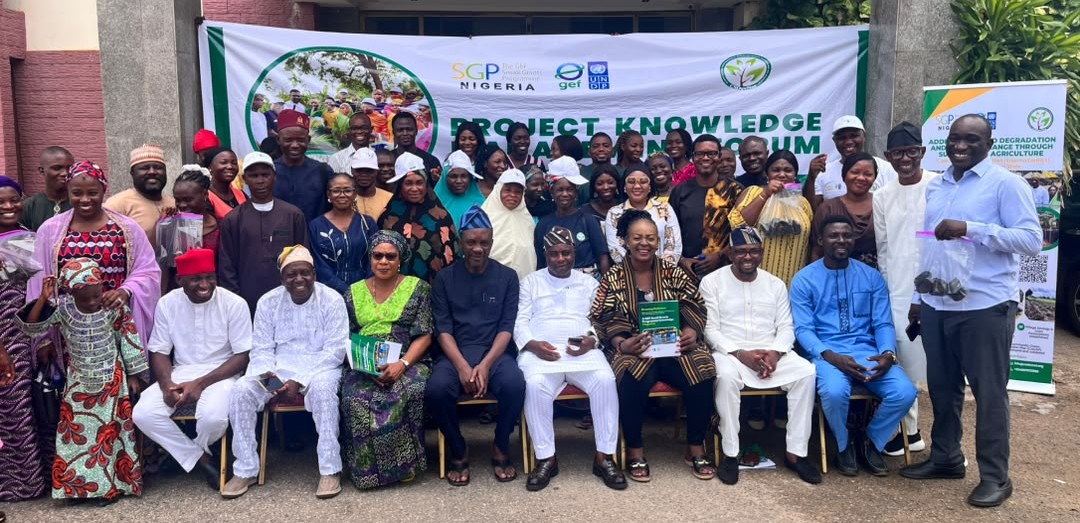
On 16 September 2026, the Climate and Sustainable Development Network of Nigeria (CSDevNet), with financial support from the Global Environment Facility Small Grants Programme (GEF-SGP), implemented by the United Nations Development Programme (UNDP), held the close-out event of the project titled “Addressing Land Degradation and Climate Change through Sustainable Agriculture in Coal Mining Communities, Enjema District, Ankpa Local Government Area, Kogi State.” Held in Lokoja, Kogi State, the event brought together more than 50 participants, including representatives of the Kogi State Government, implementing communities, traditional institutions, civil society organisations, development partners and members of the media.
The project was designed to address interconnected environmental and livelihood challenges arising from land degradation, unsustainable land use, climate variability and the legacy of coal mining in Enjema District. It implemented an integrated package of interventions focused on climate-smart agriculture, renewable energy, sustainable aquaculture, agroforestry, financial inclusion and participatory environmental governance. Over the implementation period, the initiative established a climate-smart demonstration farm, installed a solar-powered water supply system, promoted integrated farming systems, restored degraded land through tree planting and strengthened community institutions through Village Savings and Loan Associations (VSLAs).
In his welcome remarks, Mr. Steve Abuh, National Network Coordinator of CSDevNet, emphasised the importance of collaboration, community ownership and partnerships in achieving sustainable development outcomes. He noted that the close-out was not only an opportunity to celebrate achievements but also to reflect on lessons and identify opportunities for sustainability and replication. “As the saying goes, ‘If you want to go fast, go alone; if you want to go far, go together.’ This reflects the spirit of the Enjema project, where community participation, partnership and local ownership have been central to promoting sustainable livelihoods and environmental action,” he said.
Giving a goodwill message, Hon. Engr. Joseph Oluwasegun Stephen, Commissioner for Environment, Kogi State, highlighted the growing urgency of climate action, particularly in the face of changing weather patterns and increasing climate vulnerability. He acknowledged the contribution of CSDevNet and GEF-SGP to climate and environmental action in the state, noting that the Kogi State Government had planted 17,161 trees across the state in 2024 and was promoting interventions such as briquette use and collaboration with ACReSAL to address climate-related impacts.
“We are here today to talk about climate change and the shift in weather patterns, which requires urgent attention. As individuals, government and civil society organisations, we must ask ourselves: what are we doing to mitigate climate change?” he stated.
The National Coordinator of the GEF Small Grants Programme (GEF-SGP), Dr. Ibironke Olubamise, has called on communities benefiting from the CSDevNet-led project in Enjema to take ownership of the initiatives and sustain the gains achieved beyond the project implementation period. Speaking at the Project Knowledge Management Forum and High-Level Policy Dialogue, Dr. Olubamise noted that the GEF-SGP supports community-led environmental initiatives that address local environmental challenges while improving the livelihoods of participating communities. She commended CSDevNet for its commitment to the project and appreciated the community leaders, traditional institutions and beneficiaries for their active participation. “A journey of a thousand miles begins with a single step,” she noted, describing the project as an important step towards demonstrating how community-led environmental action can contribute to broader climate and development goals.
Dr. Olubamise further encouraged communities to embrace and manage the project as their own, stressing that its long-term success depends on continued local ownership after CSDevNet concludes its implementation activities. She also emphasised the importance of collaboration among communities, civil society organisations and government at the federal, state and local levels in supporting Nigeria’s climate change commitments and international obligations. She urged beneficiaries to continue sharing their challenges, successes and lessons with the GEF-SGP, noting that such feedback can help strengthen future interventions and demonstrate the sustainability and impact of community-based initiatives. She reaffirmed the programme’s interest in seeing the project’s achievements continue to benefit communities, the environment, and broader climate action efforts.
Also speaking at the event, CP Naziru Bello Kankarofi (Rtd.), Executive Secretary of the Kogi State Emergency Management Agency (KOSEMA), commended CSDevNet for creating a platform to examine the project’s outcomes, lessons and prospects. He explained that Kogi State had strengthened its approach to disaster management by moving beyond reaction towards preparedness, early warning and proactive planning, particularly in response to recurrent flooding and other hazards. “Under the leadership of the governor, the state is no longer reactive to natural disasters. The state has a 12-month plan for preparedness and early warning,” he said, while appreciating the project for contributing to knowledge and resilience-building within vulnerable communities.
Representing the Kogi State Ministry of Agriculture, Mrs. Falusi Abimbola, underscored the importance of sustainable agricultural practices and environmental stewardship. She noted that many farmers travel considerable distances to cultivate their crops, making the protection and restoration of productive land particularly important. “The people go far to cultivate their crops, and we believe that if a tree is cut down, it should be replanted,” she said, stressing the need for responsible land use and continued tree planting as part of efforts to sustain agricultural productivity and protect the environment.
Representing the Onuh Ankpa Community, Mallam Abubakar Jubril reflected on how the project had broadened community understanding of climate change and introduced new livelihood opportunities. He explained that before the intervention, community attention was largely focused on coal mining, with limited awareness of climate-smart alternatives. “Before now, we did not have enough enlightenment about climate change. Our interest was mostly in coal, but with the intervention, we have learnt fish farming and smart ways of cultivating our yams and tomatoes. We are now rich in fish farming, and we call on the government to further collaborate with NGOs to strengthen the impact of the project,” he said.
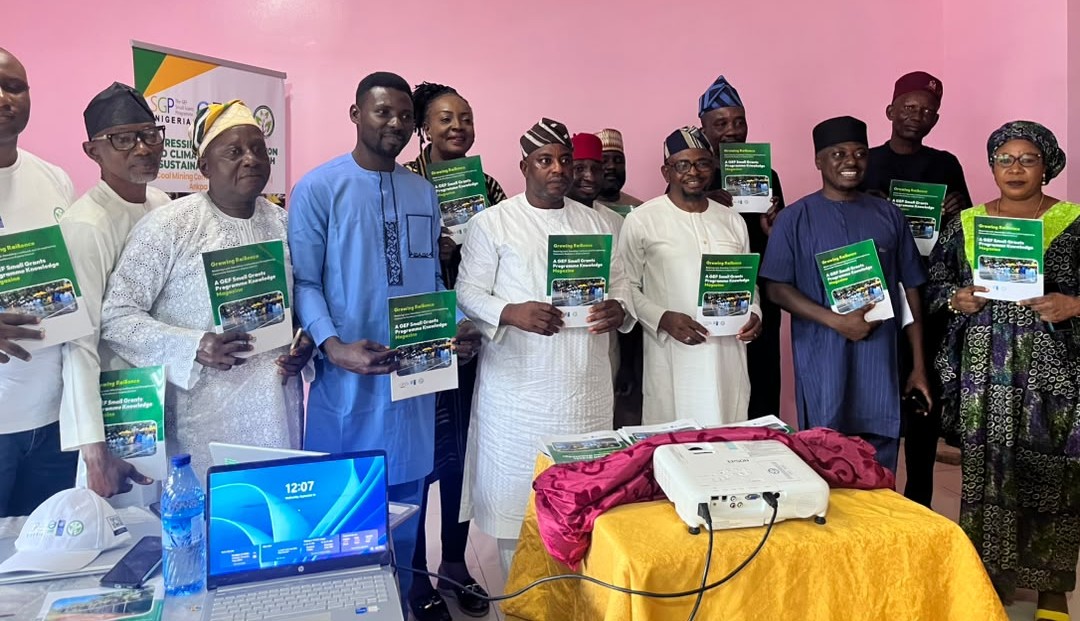
The close-out also featured the launch of the project’s knowledge management magazine and documentary, documenting the experiences, lessons and impacts of the intervention in the Enjema communities. Key achievements highlighted included the establishment of 20 Village Savings and Loan Associations, training and organisation of more than 1,000 community members, establishment of 20 community-managed aquaculture ponds, stocking and production of 10,000 catfish juveniles, planting of 1,000 Tenera oil palm seedlings, establishment of 8 hectares of community land for agroforestry, and the development and validation of one Community Green Action Plan (CoGAP). The outcomes demonstrate the potential of community-led approaches that combine environmental restoration, sustainable livelihoods, climate resilience and local governance to address the complex challenges facing communities affected by land degradation and climate change.