

 ABOUT THE PROJECT
Restoring Landscapes. Strengthening Livelihoods. Building Resilient Communities.
Across many rural communities in Nigeria, climate change and environmental degradation are no longer future concerns. They are daily realities that directly influence food production, household incomes, public health, and economic opportunity. For communities located within mining landscapes, these pressures are even more pronounced. Land disturbance, declining soil fertility, unreliable rainfall, and limited livelihood opportunities continue to undermine sustainable development and increase community vulnerability.
Recognising these challenges, the Global Environment Facility Small Grants Programme (GEF-SGP), implemented by the United Nations Development Programme (UNDP), provided support to the Climate and Sustainable Development Network (CSDevNet) to implement the project “Addressing Land Degradation and Climate Change through Sustainable and Climate-Smart Agriculture in Coal Mining Communities” in Enjema District, Ankpa Local Government Area of Kogi State.
The project was conceived as an integrated response to the interconnected environmental, economic, and social challenges facing the community. Rather than focusing on a single intervention, it combined landscape restoration, climate-smart agriculture, sustainable aquaculture, community organisation, environmental governance, and financial inclusion into a unified development model.
At its core, the project sought to demonstrate that restoring degraded ecosystems and improving rural livelihoods are mutually reinforcing objectives. Healthy landscapes support productive agriculture, while stronger livelihoods reduce pressure on natural resources and encourage long-term environmental stewardship.
Implementation was built around five mutually reinforcing pillars:
Promoting climate-smart agricultural practices that improve soil health, increase productivity, and strengthen resilience to climate variability.
Establishing integrated aquaculture systems powered by renewable energy to diversify household incomes and improve food security.
Strengthening community organisation through Village Savings and Loan Associations (VSLAs) and farmer cooperatives that enhance financial inclusion and collective action.
Raising environmental awareness while promoting ecosystem restoration through economic tree planting and sustainable land management.
Developing a Community Green Action Plan (CoGAP) to provide a long-term framework for community-led environmental governance and coordinated local action.
The project was implemented through a participatory approach that placed community ownership at the centre of decision-making. Traditional institutions, local government authorities, women and youth groups, farmer associations, technical experts, and development partners worked together to identify priorities, implement activities, and shape the future direction of environmental management in Enjema District.
Beyond delivering infrastructure and training, the project invested in strengthening local institutions capable of sustaining progress beyond the grant period. The establishment of functional VSLAs, demonstration farms, integrated aquaculture facilities, and the Community Green Action Plan provides a foundation upon which future investments and partnerships can build.
The project also demonstrates how renewable energy, sustainable agriculture, environmental restoration, and inclusive governance can be combined within a single community development framework to address multiple development challenges simultaneously. This integrated approach reflects growing international recognition that climate resilience, ecosystem restoration, food security, and local economic development are closely interconnected.
As documented throughout this magazine, the achievements of the project extend beyond physical outputs. They represent meaningful progress towards stronger environmental governance, improved livelihood opportunities, enhanced community resilience, and a shared commitment to protecting the natural resources upon which future generations depend.
Why Enjema?
A Community at the Crossroads of Environmental Degradation and Opportunity
Nestled within Ankpa Local Government Area of Kogi State, Enjema District is a predominantly agrarian community where agriculture has sustained households for generations. The fertile lands of the district have long supported the cultivation of cassava, maize, yam, vegetables, and other food crops, while its rivers and wetlands have provided opportunities for fishing and small-scale livestock production. For many families, farming is not simply an occupation but the foundation of household income, food security, and cultural identity.
Yet beneath this agricultural landscape lies one of Kogi State’s most significant mineral resources, coal. For decades, coal extraction has contributed to local economic activity, creating employment opportunities and generating income for some households. However, the environmental costs associated with mining have increasingly threatened the very natural resources upon which the wider community depends.
As mining activities expanded over the years, large areas of land were disturbed without adequate reclamation. Productive farmland gradually gave way to exposed soils, abandoned mine sites, and degraded landscapes. Vegetation cover declined, erosion intensified, and fertile topsoil was lost. These environmental changes have steadily reduced agricultural productivity while increasing the vulnerability of farming households to climate variability.
The environmental pressures facing Enjema extend beyond mining alone. Climate change has emerged as a significant threat to agricultural production across the district. Farmers report increasingly unpredictable rainfall patterns, shorter growing seasons, prolonged dry spells during critical planting periods, and more frequent episodes of intense rainfall that damage crops and accelerate soil erosion. These changing climatic conditions have disrupted traditional farming calendars and increased production risks for smallholder farmers who rely almost entirely on rain-fed agriculture.
The project’s baseline assessment confirmed that agriculture remains the primary source of livelihood for most households within the community. However, the survey also revealed significant constraints to productivity, including declining soil fertility, limited access to improved agricultural technologies, inadequate irrigation infrastructure, poor access to extension services, and increasing environmental degradation associated with mining activities. Community members consistently identified access to water, improved farm inputs, technical knowledge, and affordable finance as essential requirements for improving agricultural productivity and strengthening household resilience.
Environmental degradation has also created broader socio-economic consequences. As agricultural productivity declines, household incomes become increasingly unstable, particularly among women and youth who depend heavily on farming and related economic activities. Limited livelihood diversification increases dependence on environmentally fragile natural resources, creating a cycle in which environmental degradation and rural poverty reinforce one another. Without strategic intervention, these trends threaten long-term food security, economic stability, and community well-being.
Despite these challenges, Enjema possesses significant assets that make it well positioned for sustainable transformation. The district has fertile agricultural land, strong traditional institutions, active community leadership, and a population with extensive farming knowledge and experience. During project implementation, these strengths became evident through the donation of community land for the demonstration farm, active participation in Village Savings and Loan Associations (VSLAs), volunteer support during project activities, and broad stakeholder commitment to environmental restoration and sustainable agriculture.
These characteristics made Enjema an ideal location for demonstrating an integrated approach to climate resilience. Rather than treating environmental restoration, agriculture, livelihoods, and governance as separate issues, the project recognised that lasting change requires coordinated action across all these areas. Investments in renewable energy, climate-smart agriculture, aquaculture, financial inclusion, environmental awareness, and participatory environmental planning were therefore designed to reinforce one another while strengthening the community’s capacity to manage future environmental and economic challenges.
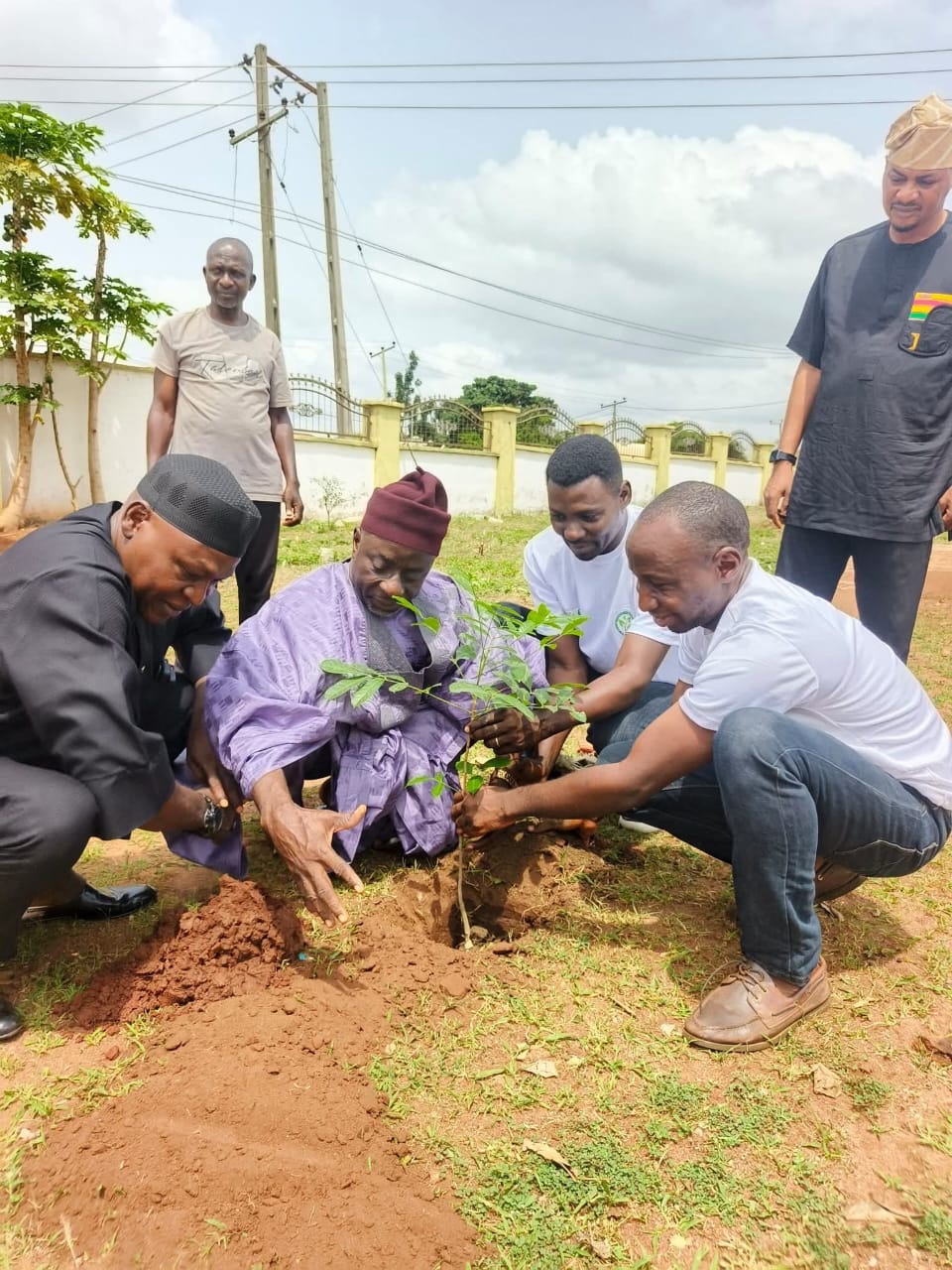 Today, Enjema is increasingly recognised not only as a community confronting the legacy of environmental degradation but also as an emerging example of how local leadership, strategic partnerships, and community participation can transform environmental challenges into opportunities for sustainable development. The lessons emerging from Enjema demonstrate that restoring degraded landscapes is not solely about rehabilitating ecosystems. It is equally about restoring livelihoods, strengthening institutions, creating new economic opportunities, and building resilient communities capable of adapting to an increasingly uncertain climate.
