

Written by: Paul Gwumapan Joseph
Bayelsa State, located in the heart of Nigeria’s Niger Delta, remains one of the country’s most flood-vulnerable regions. Year after year, communities face the devastating consequences of flooding, including the destruction of homes, farmlands, infrastructure, and livelihoods.
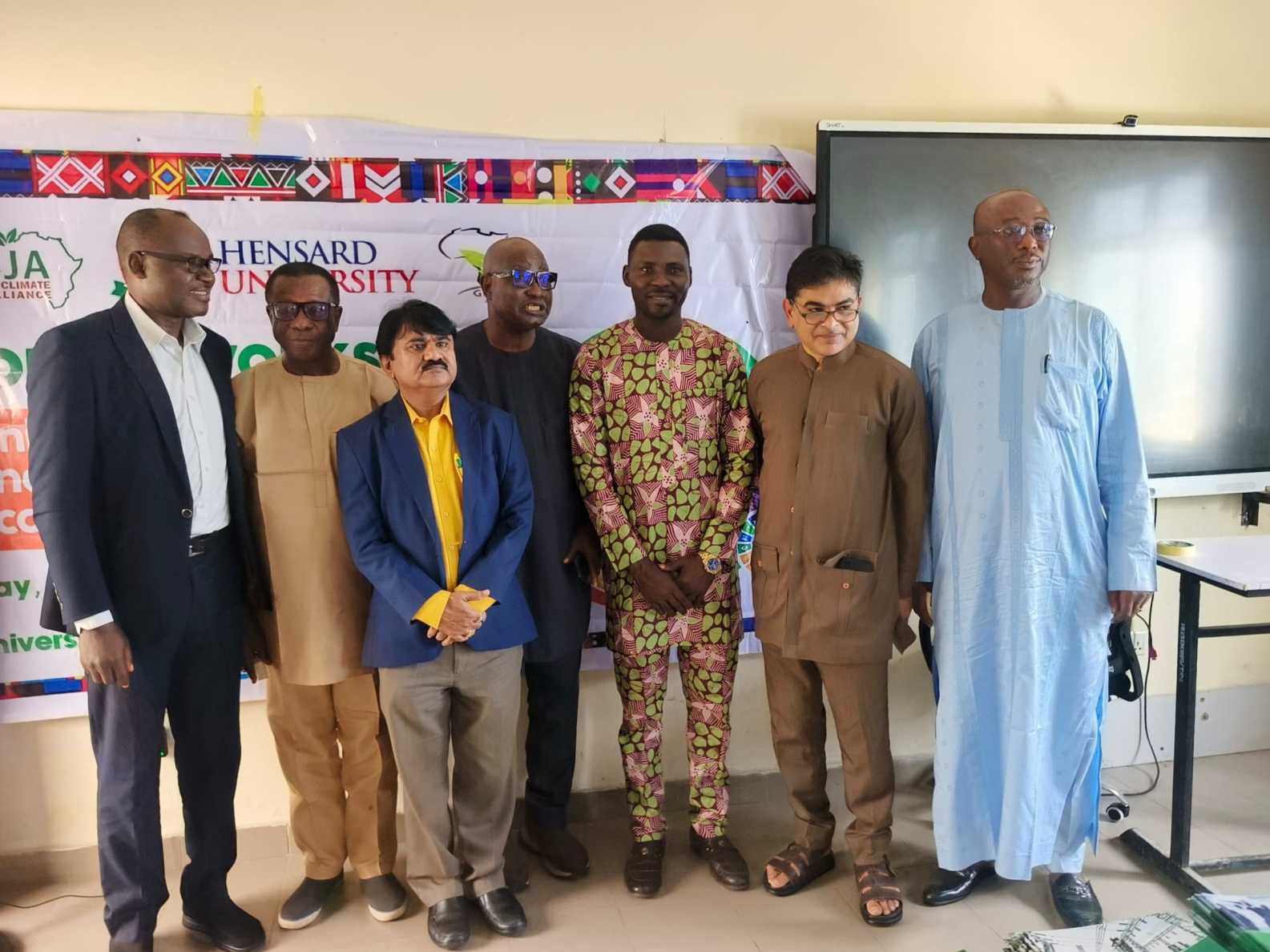
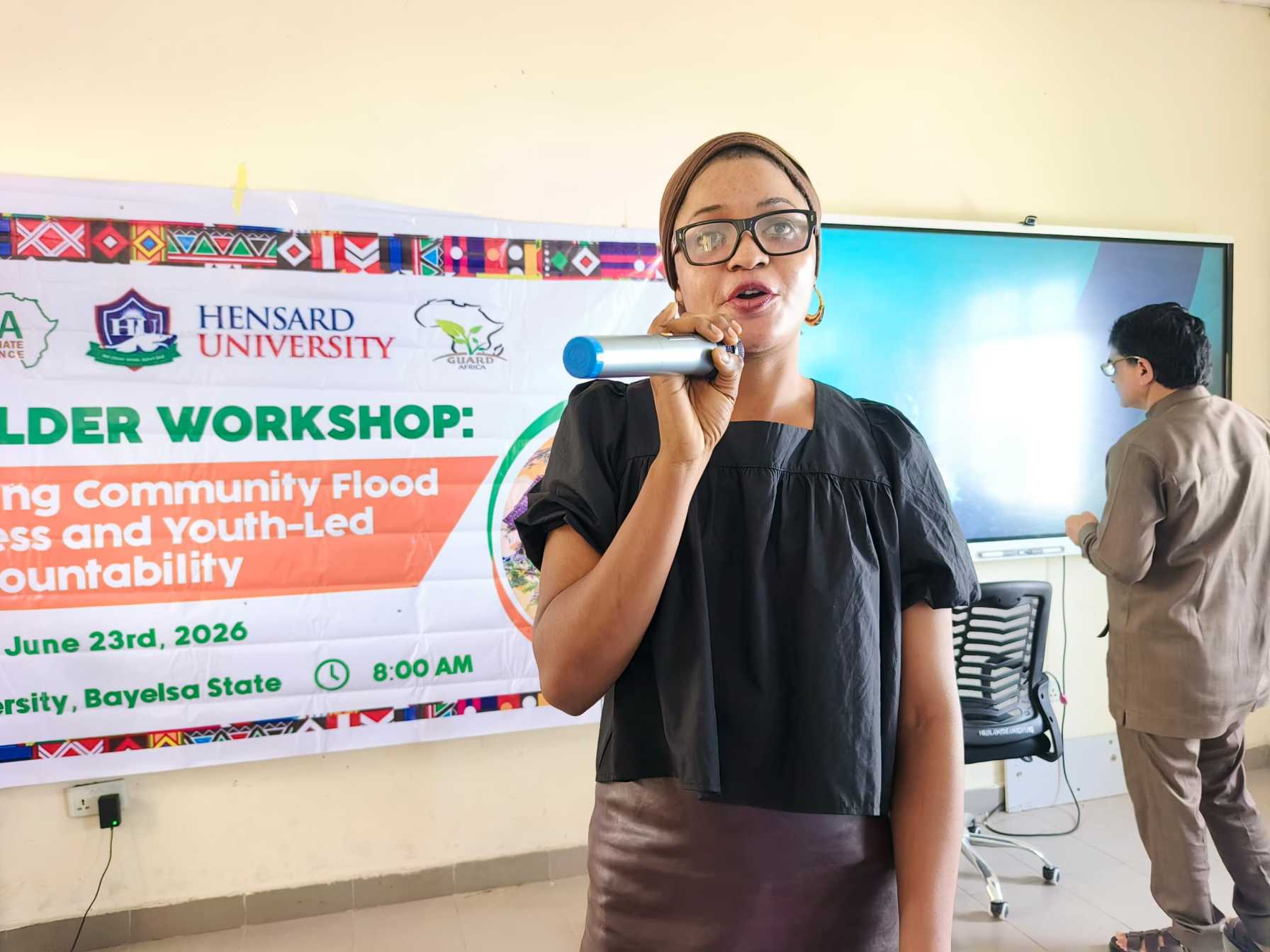
Against this backdrop, the Climate and Sustainable Development Network (CSDevNet) convened a landmark workshop on “Strengthening Community Flood Preparedness and Youth-Led Climate Accountability” at Hensard University, Toru-Orua, Bayelsa State, on 23 June 2026.
The one-day workshop brought together academics, climate scientists, government representatives, civil society actors, youth leaders, and community stakeholders to explore practical solutions for strengthening local resilience to floods while promoting youth participation in environmental governance.
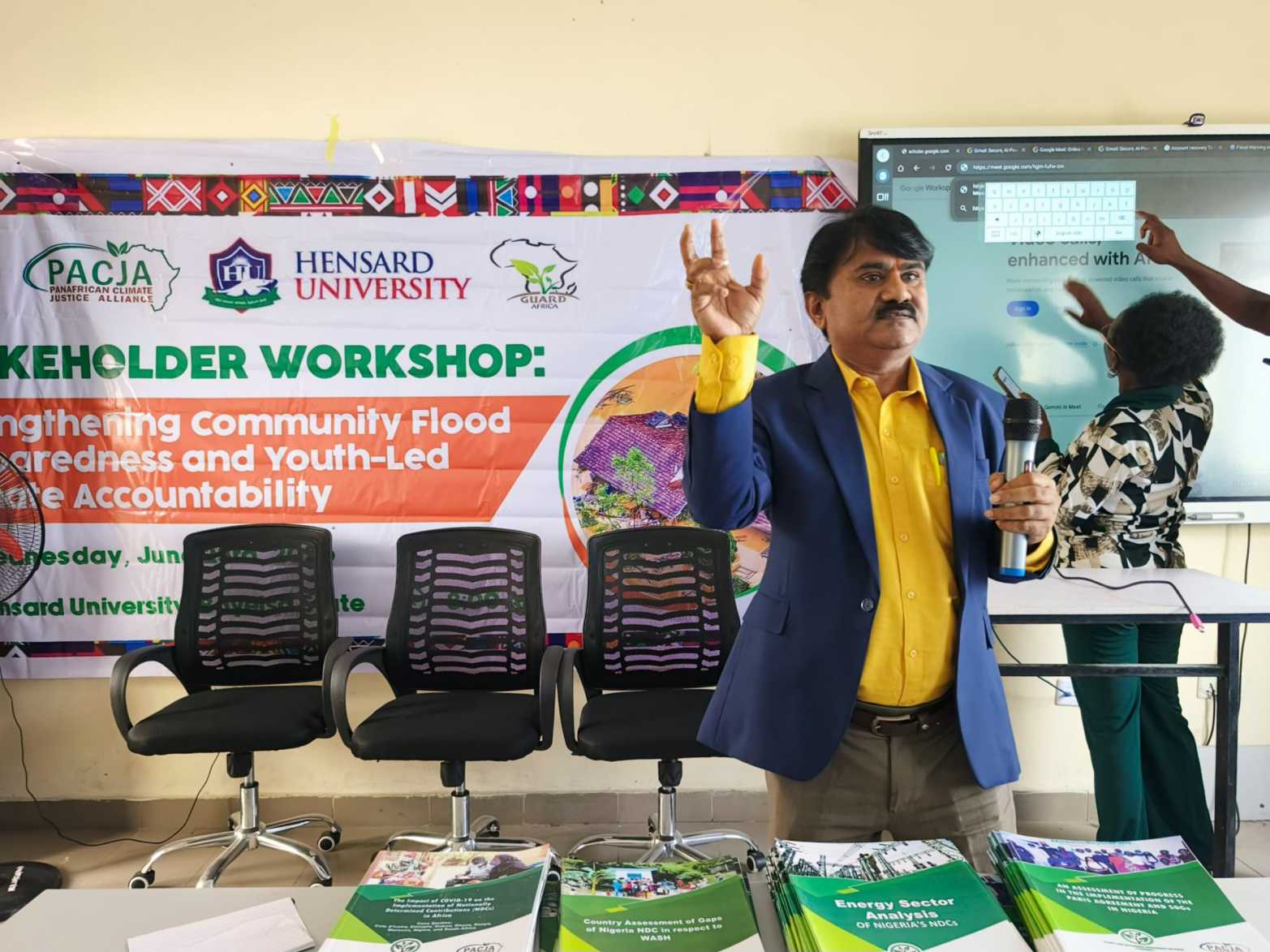
Welcoming participants to the event, Professor Femi Chaka of Hensard University’s Faculty of Communication and Media Studies emphasized the institution’s commitment to generating knowledge that directly serves communities and addresses real-world challenges.
Declaring the workshop open, the Vice Chancellor of Hensard University, Professor Kota Sudhakar, underscored the critical role of higher education institutions in addressing climate risks.
“Universities must not remain centres of knowledge alone; they must become bridges that connect science to community survival and resilience,” he said.
The National Network Coordinator of CSDevNet, Mr. Abuh M. Steve highlighted the urgency of strengthening local responses to climate impacts. He said, “Climate change is a global challenge that requires a global response, but the actions that save lives must happen at the community level. Community action is necessary to protect lives, livelihoods, and the environment.” His remarks set the tone for a day focused on practical solutions, local leadership, and collective responsibility.
The technical sessions began with an in-depth presentation by Professor Unekwu Onuche, who examined the causes and impacts of flooding across Bayelsa State. He explained how heavy rainfall, river overflow, poor drainage systems, and uncontrolled dam releases combine to create recurring flood disasters that threaten food security, public health, and local economies.
Importantly, he translated scientific information into practical guidance for communities.
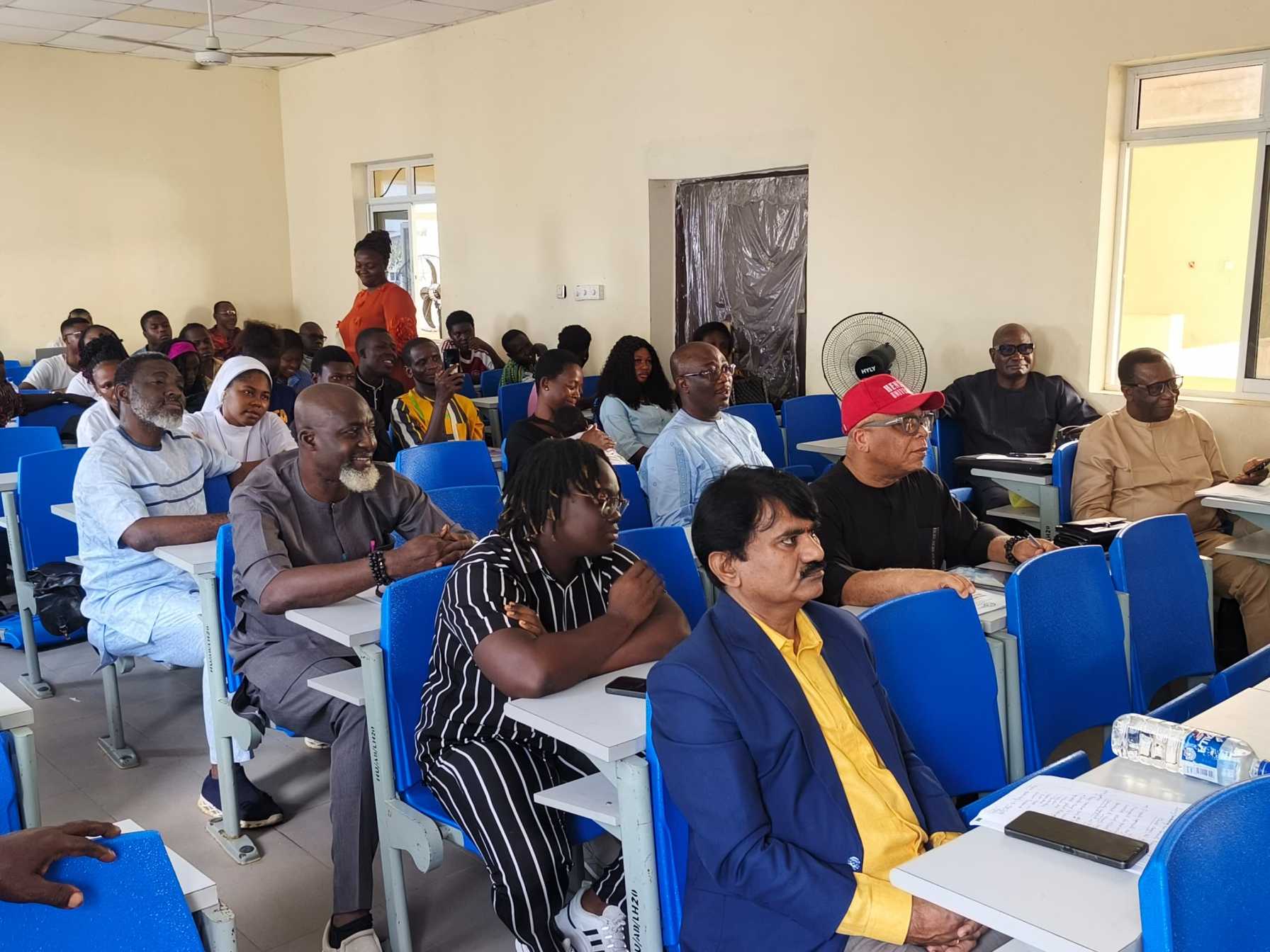
“Flood preparedness begins long before the water arrives. Communities must learn to recognize early warning signs, monitor environmental changes, and act before disaster strikes.”
Professor Onuche also encouraged residents to monitor rainfall trends, river levels, soil saturation, and other indicators while adopting basic safety measures such as clearing drainage channels and avoiding movement through floodwaters.
Building on this discussion, Professor Islam Zubairul introduced participants to satellite-based flood prediction systems and remote sensing technologies that can support early warning efforts in the Niger Delta.
“Technology can provide communities with critical time to prepare, evacuate, and protect livelihoods. However, information only saves lives when it reaches people early and in a form they can understand.” He added.
He further advocated for regular community sensitization and stronger connections between scientific institutions and local populations.
One of the most engaging sessions of the workshop focused on youth leadership and environmental accountability, facilitated by Madam Uzor Jessica.
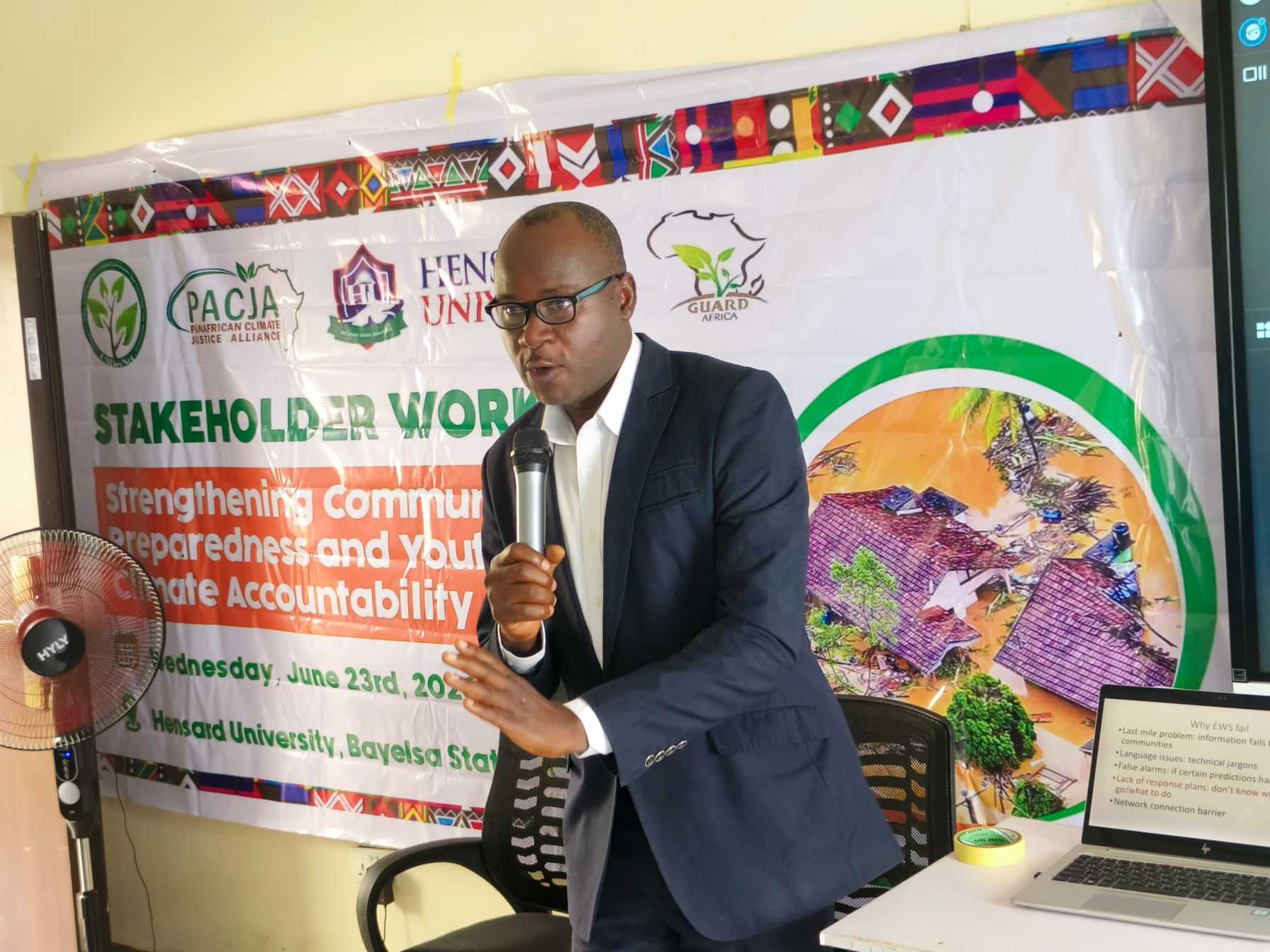
Challenging conventional perceptions of youth participation, she encouraged young people to move beyond passive engagement and become active monitors of environmental conditions and public accountability. She emphasized that young people should not be treated merely as beneficiaries of climate programmes, but instead as observers, mobilizers, innovators, and accountability champions who can help communities respond to environmental threats.
The session introduced participants to practical approaches for environmental monitoring, evidence gathering, advocacy, and reporting. Discussions also explored waste segregation and waste-to-wealth opportunities that can create livelihoods while addressing environmental degradation.
According to Madam Jessica: “Youths should be actively involved and supported to mobilize, observe, and report environmental signals. With the right tools and recognition, they can become powerful agents of community resilience.”
Participants strongly endorsed the need for institutional support mechanisms that enable young people to sustain these roles over time.
A major highlight of the workshop was a practical session on mangrove restoration led by Professor Unekwu Onuche and Dr. Ogechi Cookey Ndukwe.
The facilitators demonstrated how healthy mangrove ecosystems serve as natural flood barriers by reducing erosion, buffering coastal communities from storm surges, storing carbon, and protecting biodiversity.
Dr. Ndukwe noted that climate adaptation efforts must increasingly embrace nature-based solutions. According to her, “Protecting and restoring mangroves is not simply an environmental activity; it is an investment in community safety, climate resilience, and sustainable livelihoods.”
Participants subsequently formed working groups to develop community-led mangrove restoration strategies. The groups produced detailed action plans covering propagule collection, nursery establishment, environmental monitoring, awareness campaigns, and community engagement.
One youth-led group committed to collecting 1,500 mangrove propagules from healthy riverine ecosystems across Bayelsa State and establishing an elevated nursery to support future restoration efforts. Another group anchored its nursery initiative within the Faculty of Agriculture at Hensard University while incorporating primary and secondary school students into monitoring activities.
Key Outcomes and Commitments
The workshop produced a set of practical recommendations aimed at strengthening flood resilience and environmental governance across Bayelsa State. Participants committed to:
- Expanding flood risk communication through local languages, community radio, drama, and film.
- Organizing regular community preparedness and sensitization meetings.
- Promoting the use of satellite data and remote sensing for early warning systems.
- Institutionalizing youth and women’s participation in flood monitoring and environmental accountability structures.
- Scaling up mangrove restoration and other nature-based adaptation measures.
- Addressing critical infrastructure gaps that hinder disaster preparedness and emergency response.
- Promoting waste segregation and waste-to-wealth initiatives to create livelihood opportunities while reducing environmental degradation.
Beyond recommendations, participants left with concrete assignments, including establishing community flood preparedness groups, creating citizen-led environmental monitoring systems, launching mangrove nursery operations, and developing community emergency response plans.
The Bayelsa workshop reflects CSDevNet’s broader commitment to strengthening climate resilience across Nigeria. Through partnerships with academic institutions, communities, government agencies, and development partners, CSDevNet continues to support locally driven adaptation initiatives that place science, community leadership, and youth participation at the centre of sustainable development.
As flooding risks continue to intensify across the Niger Delta, the workshop demonstrated that effective resilience is built not only through infrastructure and technology, but also through informed citizens, empowered youth, and strong community institutions.
The flooding may return, but the knowledge, partnerships, and action plans forged at Hensard University have laid a stronger foundation for communities across Bayelsa State to prepare, adapt, and thrive.